
 ROSE BRAND
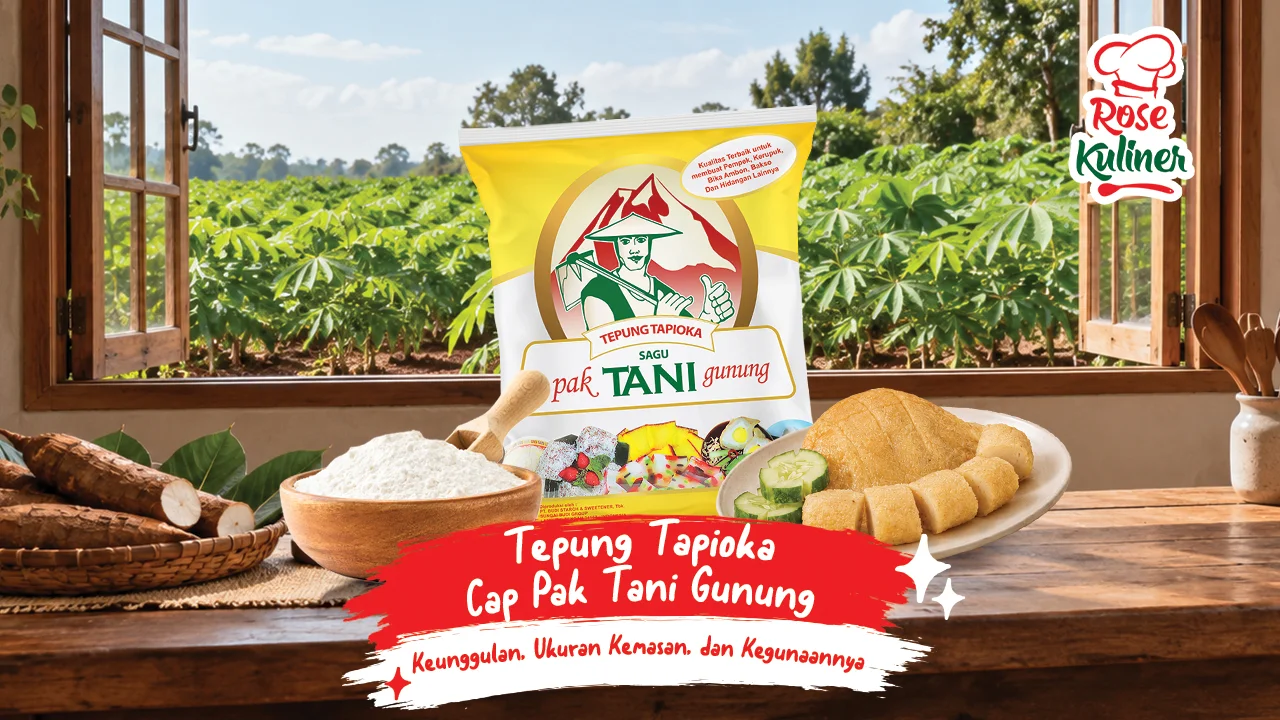
A lot of culinary vendors and housewives are looking for tapioca flour, which is consistent, scarcity, and unshaven. On the market, one of the names that is frequently encountered is Tepung Tapioka Cap Pak Tani Gunung, especially on large packaging for production needs. Unfortunately, there's not a little doubt as to what the advantage of this product is, what size is available, and for what processed flour is best suited.
This article will discuss the end Tepung Tapioka Cap Pak Tani Gunung, from the understanding of tapioca flour itself, the ingredients, the fine tapioca flour traits, the variety of use in the kitchen, until a guide chooses quality tapioca flour. The goal is simple, which is to help you stop guessing and get to choose the right flour for food and effort.
What is Tapoka Flour
The tapioca flour is the starch extracted from the tapioca. The function in the kitchen is generally the texture of chewy, cursive materials, as well as the main ingredient in many market dishes. Because almost all of it is pure starch without gluten, this flour produces a very distinctive texture, chewy and slightly sticky when cooked.
In different areas, this flour is known by some names that actually refer to the same material or very similar. Here's some often confusing terms:
- Surround Kanji: Another most common name for tapioca flour, both referring to the same cassava starch.
- Aci-plated: Sunda's word for tapestry, identical to tapioca.
- Singulate is sometimes the same term, even if it's technically intact, different from pure cassava starch.
So when a recipe says canji flour or aci flour, in practice you can use tapioca flour without a problem.
Tapoka flour made of What
The tapioca flour is made of cider pati Singuk (https: / / id.wikipedia.org / wiki / Keela _ tree) or wood yams. The process began with a fine-sharpened cassava, and then blackmailed to separate the cider from the fiber dregs. This is the sari that was then dyed, dried up, and melted down into the clean white flour we know.
Because all that's taken is the wing, tapioca flour barely contains fibers or proteins. This is what makes the texture very smooth and bright white. In the production of factory scale, the defusing and drying process is done in hygienic terms with modern technology so that the produce of flour is cleaner, more dry, and less likely to smell.
Good Tapoka Flour
Before discussing certain products, it's important to recognize what quality tapioca flour looks like. The following traits can be taboo when you examine flour, both in small packs and large sacks:
- White and clear, neither gray nor dull.
- The texture is so delicate and slippery when it's squeezed between the fingers.
- There's a faint sound or a subtle creak when it's held and pressed, a low water-level sign.
- No clots and is free of fleas or excrement.
- It doesn't smell musty or sour, it's just neutral-scented starch.
Of all of those marks, the strangeness of being grazed is the most distinctive characteristic that separates the quality of dried tapioca flour from the already muffled flour.
Extensive Tepung Tapioka Cap Pak Tani Gunung
Tepung Tapioka Cap Pak Tani Gunung known among the perpetrators as large tapioca flour that is widely used for production needs. Some of the things that make him quite demanding among others:
- Fine and delicate textures, suitable for the processed opinion that demands stable realities such as Bakso and market snacks.
- White is clean so the food is interesting and not dull.
- Available in large, efficient packaging for high volume venture needs.
- The absorbent power and durability, helps produce malleable dough.
For the users of the culinary UMKM and the food industry, this quality consistency is important because it affects the end product and the customer satisfaction.
Tapiocao Flour Size
The pack size determines practicality, especially if adjusted to the size of needs. In general, tapioca flour on the market is present in some of the following packaging options:
- Small packaging is about 500 grams, practically for household needs and occasional use.
- Big packaging is a sack, generally for business, catering and food industry that requires a lot of supply.
Tepung Tapioka Cap Pak Tani Gunung especially found in large packaging format 25 kilograms that are intended for production needs. For the record, meatball or crackers that produce every day would be more efficient and efficient using sack packs than buying a lot of small packs.
The benefit of Tapoka Flour in Kitchen
This part is the most awaited reader, because this is where tapestry shows its role. Its uses are very diverse and it can be grouped based on its function.
The Hefty Texture Giver
The tapioca flour is the key to chewy texture in many Indonesian foods. His tall temple makes dough limber and chewy after ripe. The real example is in Bakso (https: / / id.wikipedia.org / wiki / Bakso), Cilok, Cireng, Theater, and Boba.
Market Jaban Major
Many traditional markets rely on tapioca flour as the main ingredient or mix. Cookies like Ongol, Cent, and Pepe-plentiful cookies take advantage of these chewy and fluff flour after cooking. In some cookies, the tapioca also has a little transparent effect that adds to the appeal of the look.
Cookmaster material
In addition to the dough, tapioca flour is also often used as gravy and sauce cutters. Just dissolve a little flour with water, then pour it into the hot dish to cancel the capcay, the steamed soup, or the sweet acid sauce. Compared to other flour, the result of tapioca tends to be more clear.
Crackers and Crickets
The tapioca flour also becomes the backbone of various crackers and dried snack. Crackers, Plenkers, and crisps, utilizing the nature of this flour that can grow and crispy when fried.
Tapiocao-seating and benefits
It's nutritious, tapioca flour dominated by carbohydrates in the form of starch, with the content of proteins, fat and very low fibers. Therefore, this flour is more precise seen as a fast energy source than a complete nutritious source.
Some practical benefits of tapioca flour among others:
- It's a source of energy because of its high carbohydrates.
- Gluten-free naturally, so it can be an alternative to those who avoid gluten. More detailed information on nutritious backlog profiles can be seen in nutrition sources like Heathline (https: / / www.Healthline.com / nutrition / tapaoca).
- It's easy to digest so it's suitable for a lot of work every day.
For a balanced record, since its contents are almost entirely carbohydrates, perhaps tapioca flour is consumed along with another protein and fiber-rich ingredient to keep nutritious intake intact.
The difference between Tapioka Flour and Other Flanks
One of the greatest sources of confusion is separating the tapioca from the other similar flour. Here's a quick explanation that is often sought after.
Tapoka and Kanji's flour
They're both exactly the same. Surround Kanji is another name for tapioca flour, equally made of cassava starch. So if a recipe says kanji flour, you can just use tapioca flour.
Tapoka and Sagu Flour
Although they look similar, they both come from different materials. The tapioca flour is made out of cassava, while the sago flour is taken from the palm of a sagu tree (https: / / id.wikipedia.org / wiki / sagu). Both of them can replace each other on some recipes, but the texture can finally be a little different.
Tapoka and Maizena Flour
The difference is the raw materials. Maizene flour is made of corn, while tapioca is of cassava. As a bender, the maizene produces a softer texture and a little murky, while the tapioca is more chewy and warped.
Tapoka and Flour Flour
This is the most fundamental difference. The flour is made of wheat and contains gluten, so it's suitable for bread and noodles. The tapioca flour does not contain gluten and function gives reality, not an expanding structure like wheat.
General Error while using Tapoka Surround
In order for maximum cuisine, avoid some of the following common mistakes:
- Paying tapioca solution directly in abundance so the brush clots. Better pour it a little bit and stir it.
- Using tapioca instead of wheat for bread, when tapioca can't expand like gluten.
- Keep the flour in the dampers so it clots and it reeks easily.
- The root of tapioca is too much on the dough so the result becomes too hard and alot.
How to Save Tepung Tapioka Cap Pak Tani Gunung
The true storage determines the tenacity of flour, let alone for large packaging. Keep tapioca flour in a sealed container and airtight so it doesn't damp and avoid lice. Put it somewhere dry and cool, away from exposure to water or direct sunlight.
Good tapioca flour can last long enough. However, keep your eye on the sign of destruction like the musty smell, the changing color of motherhood, the texture of clots, or the emergence of fleas. Keeping the hygiene and drought storage in line with the principle of food security recommended agencies like BPOM (https: / / www.pom.go.id /).
Select Quality Tapoka Flit
The quality tapioca flour is known for its clean white colour, its delicate texture, and its neutral scent without the smell of cookiness. For business purposes, the consistency factor between purchases is also an important consideration for the product to always be a uniform.
This is where it's important to choose flour from a trusted brand. As a local Indonesian brand who has been present for over 45 years, Rose Brand offer quality tapioca flour processed hygientically with modern technology. In addition to supporting the preservation of the Nusantaran culinary, the product sequence is complete for the needs of the household to the industrial scale, and it's easy to get in Shopping, Tokopedia, and Bukapak. By choosing the finest tapioca flour, the produce of meatball, the market jot, and your homemade crackers will be more chewy, clean and consistent over time.