
 ROSE BRAND
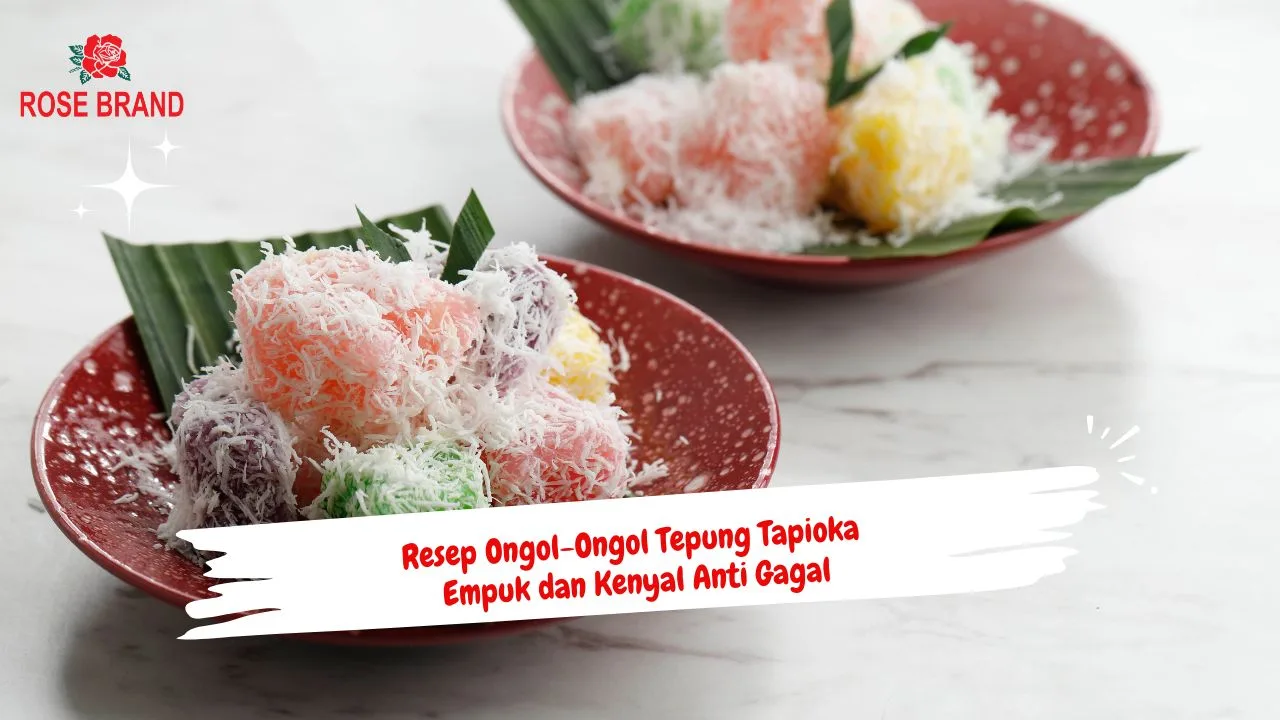
The government includes simple-looking markets, but enough people have failed to make them at home. The problem is almost always the same, it's a hard texture, a pillow, or it's just too soft that it can't be cut clean. And the soft, chewy Ongol key actually lies in the selection of flour, the ratio of liquid, and the correct cooking techniques.
This article talks about a complete tapestry of Ongol tapestry, from materials, development steps, to technical reasons behind every stage. You'll also find an explanation for why tapioca flour is the right main ingredient, the difference between cross-eyed sawdust, a common mistake that makes Ongogol fail, and a way to keep the texture chewy the next day.
What is it
Ongol-ongol is a traditional Indonesian cake that textures chewy and transparent which is normally presented with scar coconut sprinkles. This cake belongs to a market group that is easy to find in traditional markets, hajama events, until the evening snack tables at home. It's sweet, legit, with a special scent of red sugar or pandan.
In general, there are two popular version of Ongogogol in Indonesia. Both rely on starch as the main ingredient, only different from its source and color:
- Tapoka flour-gobble: textured more clear and chewy, often dyed of red sugar, pandan, or other natural dye.
- The older, traditional version, the texture tends to be more visible and often use sugar aren as the main sweetener.
The tapioca version became a lot of people's favorite because the ingredients were easy to get, the results were consistent, and the texture was more friendly to the rookies.
What are you doing
This version of the Ongogol version is tapioca flour, which is the starch extracted from the Singula. After the cassava was shredded, dimmed, drained, then milked in fine white flour which was light. This is what allows the Ongol to become chewy and transparent when heated with water.
In addition to tapioca flour, it requires sugar as a sweet flavor and, on many recipes, as a color-giver. Red sugar or curly sugar gives gold chocolate and caramel scent. For the version of pandan, white crystal sugar is used to keep green pandan coming up clean. The steamed coconut sprinkles with a little salt being a complement that balances the sweet flavor.
The quality of tapioca flour determines the outcome. The green-processed flour with modern technology produces clean starch and stable chewy power, so the dough is easier to manage and not smell.
Tapoka Surround Prescription
Here's the basic congee recipe for soft, chewy sugar. This recipe produces about 20 to 24 pieces and you can do it in about 30 minutes, outside of cooling time.
Adonan material:
- 125 grams Tepung Tapioka Rose Brand
- 2 sdm Tepung Beras Rose Brand
- 75 gr Sugar Sand Rose Brand
- 75 gr
- 1 / 4 sdt Vanilla cream
- 450 ml Air
- 4 lbr leaves pandan
- 1 / 4 sdt Salt
Spray material:
- 250 grams of scar coconut
- 1 / 2 sdt Salt
- 1 / 4 sdt Vanilla cream
- 1 lbr pandan leaves
Make Way:
- Steamed coconut scar mixed with vanilla cream. Add salt and leaves for about 10 minutes, then set it aside. It makes the coconut more lasting and unstale.
- Boil water, sugar, sand sugar, and leaves till the sugar wears off perfectly. Soap sugar stew to take a shit, then let the nails warm.
- Pour sugar water little by little into the mix Tepung Tapioka Rose Brand and Tepung Beras Rose Brand while stirring it flat. Make sure there's nothing left of flour.
- Move the dough into the pot, cook it with a little fire while it keeps stirring. Adonan will go from liquid to thick, then curl like glue and turn clear. This stage is the key to chewy texture.
- Once the dough is evenly cooked and there's no white, pour it into the lojang that's been smeared a bit of oil. Flatten the surface.
- Walled up really cold and set, ideally 1 to 2 hours at room temperature. Don't cut it while it's hot because it gets sticky and crushed.
- Cut it to taste, then roll every piece over to the steamed coconut scar. Ongol-golly ready to go.
For the version of a pandan, replace the red sugar with 150 grams of sand sugar and add pasta or hot leaves to the surface. The rest of the steps remain the same.
Successful Ongogol Ciri
Before it's presented, it's good that you recognize the sign of gogols that is correct. It helps you assess the cuisine and fix it in the next experiment.
- The texture is chewy when it's bitten, but it stays soft and not as hard as rubber.
- The surface looks a little transparent or clear, not pale white which indicates undercooked dough.
- A piece can stand firm and not be crushed, but still feel soft.
- An evenly sweetened sweet, with a pandan scent or a clear red sugar caramel.
The most typical of the successful Ongogo-golly is a gentle and gentle blend at once. If your results are hard, it's likely the dough is too dry or cooked too long. If it's too soft and it can't be cut, it's either too much fluid or it's overcooked.
The difference between Tapoka Flour and Other Conditions
A lot of people have failed to make a single by choosing wrong flour. Some types of flour look similar, but give different results. This part explains the difference so you don't get it wrong.
Tapoka and Kanji's flour
The tapestry of tapioca and starch are actually the same ingredients. They're both the starch from the cassava (https: / / id.wikipedia.org / wiki / Tapoka _ tapioca), only different mention in each region. So if the recipe asks for kaniji flour, you can immediately use tapioca flour without worrying the results change.
Tapoka and Sagu Flour
This is the most exchanging couple. The sago flour comes from the trunk of a sago tree, while tapioca flour comes from a tapioca tile. They're both equally chewy, but sago tends to be more observant and more textured in Ongol. Traditional mongols do use a lot of sago, but the tapioca version is softer and easier for the newbie.
Tapoka and Maizena Flour
Maizene flour is made of corn starch. Maizena can cancel, but it doesn't produce such elastic chewy texture as tapioca. If the Ongol- ongol is made of maizene, the results will be softer and more fragile, so the maizena is not the right substitute for this cake.
Tapoka and Rice Flour
The rice flour is made of smooth ground rice and produces a softer texture and tends to be sandy, not chewy. Rice flour is better for cake like a sandwich or a Nagarsari. For the chewy Ongol, rice flour can't replace the role of tapestry.
General Error creating Ongogol
Most of the Ongol failures can be prevented if you understand the critical point. Here's the most common mistake with avoiding it.
- They're undercooked so they're still white and they're soft. Make sure to cook until the whole dough turns clear and thickening.
- The fire was too big to cook, making the dough clench or burn at the bottom of the pot. Use small fire and stir it endlessly.
- The comparison of water and flour is not right. Too little water makes it hard, too much water makes it unset.
- Cut while it's hot. The cold ones will get sticky and crushed when cut.
- Using low quality flour that smells cold, so the smell of cake is disturbed.
_
The most delicious parts are being eaten on the same day, but they'll still be delicious the next day if they're properly stored. The proper storage is also important for keeping food safe, especially because coconut sprinkles are easily stale.
Save the Ongol in a closed container at room temperature if it will be spent in less than a day. For a longer storage, put it in the freezer, but separate it from the coconut sprinkles so it doesn't get acid fast. According to BPOM's food safety principle (https: / / www.pom.go.id /), food is either coated or coconut should not be left too long in the temperature of space as it is vulnerable to contamination.
The ones in the fridge are usually hard. You can measure it for a second or you can keep it in the temperature of space until the texture is back in order to serve it. The sign of the Ongol- golly is already not worth consuming between other mucus, sour smelling, or coming up with fungi spots.
Selecting Quality Tapoka Flour for Ongogol
The chewy, unsuccessful Ongol results rely heavily on the quality of tapioca flour you use. Good tapioca flour is clean white, texture is fine, dry, not clotting, and it doesn't smell good. This type of layer gives it consistent chewy power so the dough is easier to control.
Here comes the role tepung tapioka Rose Brand i guess. As a local Indonesian brand with over 45 years of experience, Rose Brand manufacturing kitchen materials that are properly processed with modern technology, so its quality is stable from packaging to packing. The product is available in many packaging sizes and easily purchased through Shopies, Tokopedia, and Bukalpak, both for housekeeping and culinary efforts. With consistent materials, your opportunity to be soft and chewy is much greater, and the tradition of nusantara markets remains sustainable in your kitchen.