
 ROSE BRAND
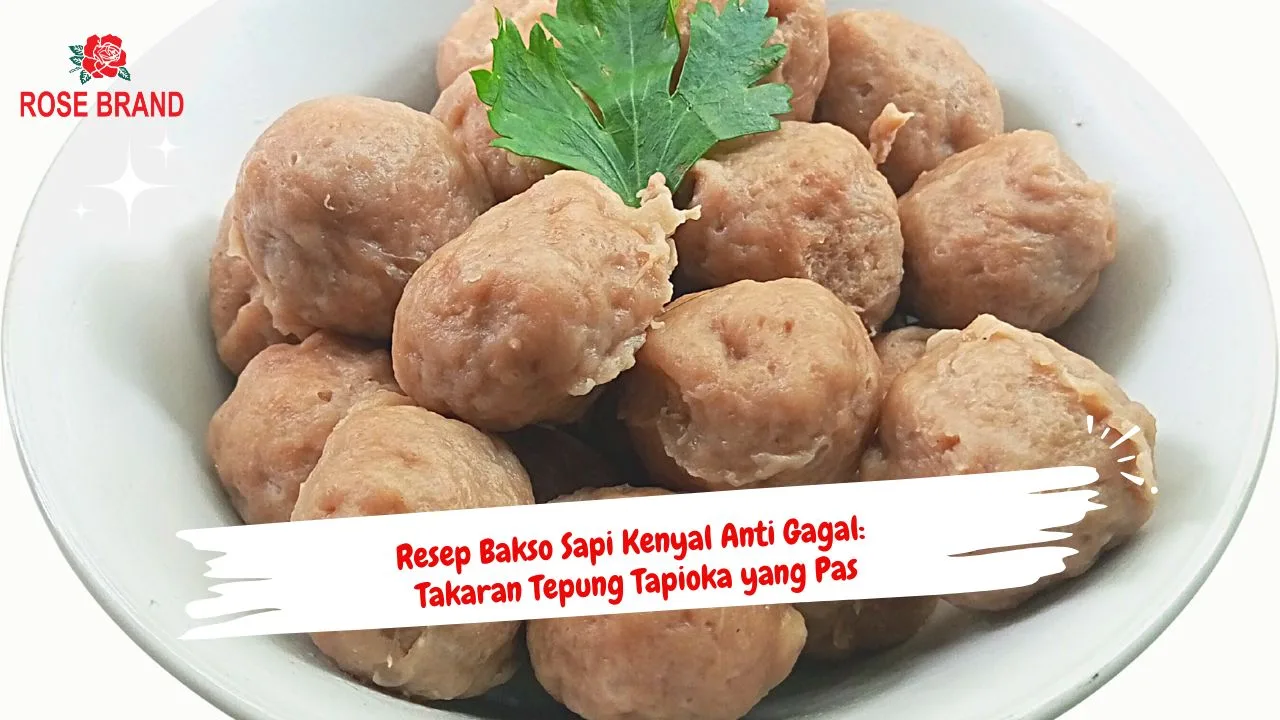
Many people have tried to make meatballs of themselves at home, but the results are often disappointing. The meatballs come out soft, easily crushed when boiled, or just too hard like rubber. In almost every case, the problem is not meat, it's the wrong size of tapestry and the wrong donation technique.
This article talks about a complete way to make the anti-failure meatballs, starting with why tapioca flour is a key to reality, how much the measure fits for every kilogram of meat, a complete recipe with steps, to the general error that makes Bakso fail. This guide is suitable for those of you who cook at home as well as culinary businesses who want a consistent meatball every time production.
Why is Tapoka Flour Making Betas
Before we talk, it's important to understand the role of tapioca flour in meatballs. The tapioca flour is the starch that's being treated by the Singuine. When the meatballs are boiled, these starches experience a process called gelatinization, which is granula starch absorbing water and expanding when the temperature rises. It's this process that forms gel and gives meatball the signature texture of meatball.
In addition, tapioca flour acts as a binding that unites protein of meat so it doesn't break easily. Without starch, ground beef will be hard to tie and meatballs tend to be crushed. Therefore, choosing fine quality tapestry is as important as choosing fresh meat.
The bottom line, the actual meatballs come from the balance, not from a lot of flour. If the flour is excessive, the taste of meat is lost and the texture becomes raw. If it's too little, the meatballs are soft and flashy. This is where the proper measure determines everything.
How many Facts of Tapoka Flour fit
The most common question is how much is the ratio of meat and flour to chewy meatballs. As opposed to 4 to 1 to 5: 1 between meat and tapioca flour. That is, every pound of meat is just paired with about 200 to 250 grams of tapioca flour.
In smaller sizes, these measures are easier to imagine:
- Flesh 250 grams: tapioca flour about 50 grams
- Flesh 500 grams: tapioca flour about 100 to 125 grams
- Flesh 1 kilogram: tapioca flour about 200 to 250 grams
As a percentage guide, many culinary experts suggest tapioca flour is 10 to 15 percent of the meat weight. The higher the proportion of the meat, the more the flesh and the denser the meatballs.
In practice, it can be adjusted to taste. Bakso merchants who want to produce extremely chewy and economically sometimes increase the proportion of flour, but the consequences are the flesh tastes less. For a steamy, chewy home meatball, staying at 4: 1 is the safest option.
Master
Besides the meat and tapioca flour, there are some supporting materials that determine success. Here's the material for making about 1 kilogram of beef meatballs:
- And the fresh meat of the thigh without fat, and a tenth part of an ephah
- Litaoka-quality flour, 200 to 250 grams
- Ice cubes or ice water, 200 grams
- White eggs, 2 items
- Garlic, six sips
- Salt, one teaspoon
- Merica powder, one teaspoon
- Beef powder, enough
- Baking powder, half teaspoon as an optional natural thinker
Every ingredient has a function. The ice cubes keep the dough temperature low during the mill so the protein of the meat isn't damaged, and it really affects reality. The egg whites help bind the dough, while the salt acts as extracts protein meat to make the dough more sticky and solid.
"How to make meatballs"
Once the materials are ready, the key to success lies in technique. Follow the following steps very carefully, especially at the temperature of the dough.
1. Grazing Meat in Cold
Cut the meat into little dice, then put it in the freezer till it's half frozen. Grazing meat along with some ice cubes using food processor to smooth. This cold temperature prevents the protein from breaking and keeping the dough chewy.
2. Insert Bun and White Eggs
Add fine garlic, salt, pepper, and powdered broth. Put in the egg whites, then grind back until the dough is blended and it's sticky. Salt at this stage helps form solid texture.
3. Add Stage Tapoka Flour
Put the tapioca flour in a little bit and just keep stirring or grinding. Don't pour all the flour at once so the dough doesn't clot. Stir it up to chellie dough, soft, and malleable.
4. Form and Boil with Two Stage Water
Boil the water, then turn the fire down until the water is just rippling, not boiling strong. A meatball with hands and spoons, then into hot water. Boil it with too much water to break the meatballs. Floating meatballs are ripe.
5. Soak and soak the cold water
Lift up the floating meatballs, then soak a little bit in cold water. It makes textures stronger and chewy. After that, the meatballs are ready with gravy or stored in the freezer.
Tips so that the meatballs are chewy and not thin
Some small things often decide between successful meatballs and failure. Notice the following points:
- Keep the dough cool from start to end, use enough ice cubes.
- Pick fresh meat without much fat, ideally part cow thigh.
- Genuine or grind of dough long enough for protein to be perfectly bound.
- Use the right amount of tapestry, don't overdo it.
- Boil it with a little fire and water that only rips.
As far as connoisseurs go, a lot of people are asking about a safe replacement borax. It needs to be confirmed that borax are prohibited in food because it's dangerous to health. Boraks is not a valid addition to food (https: / / www.kekes.go.id /) and should not be used. Natural realities can actually be achieved quite enough with the proper amount of tapioca flour, ice cubes, egg whites, and patient bending.
General Error while Creating Bakso
Knowing a common mistake will help you avoid it. Here are some of the most common:
- Too much tapioca flour so that meatballs are as hard as rubber and meat taste is gone.
- Adonan is too warm because the ice cubes are less, making the texture mushy and leaky.
- Boil it with boiling water so strong that the meatballs burst before ripe.
- It uses fat meat that makes meatballs greasy and less dense.
- Stirring the dough too short so the protein of the meat isn't perfectly bound.
Miscellaneous Measurement Variation
The exposure and technique above not only applies to cow meatballs. The same principle you can apply to a variety of popular meatballs.
To prescribe chicken meatballs, replace beef with skin-free chicken breast and reduce a little fluid because chicken meat is softer. For recipe for fish meatballs, use mackerel or white meat fish and add a little bit more tapioca flour to keep soft dough in shape. Meanwhile for the baci that doesn't wear the main meat, tapioca flour becomes the dominant ingredient.
For all those variations, the quality of tapioca flour remains the final result. A clean, delicate pati produces a more consistent texture.
Selecting Quality Tapoka Flour for Bakso
The chewy meatballs are affected by the quality of tapioca flour. Good flour has clean white colors, fine texture, dry, and not clotted. The dank flour or the smell of coolness will lower the starch and make meatball less maximum.
As a local Indonesian brand with over 45 years of experience, Rose Brand it provides higienis processed tapioca flour with modern technology. Tepung Tapioka Rose Brand are present in various packaging sizes, from household needs to business scales, so it suits either those of you who cook every once in a while and for the sake of Bakso who need regular stock. This product is available widely in the Shopies, Tokopedia, and Bukadak.
For culinary businesses and UMKM, the consistency of materials is crucial to the meatball texture in every production. With the right quality tapioca flour and the right measure, you can produce the chewy meatballs that customers like consistently, without relying on dangerous stewardess materials.