
 ROSE BRAND
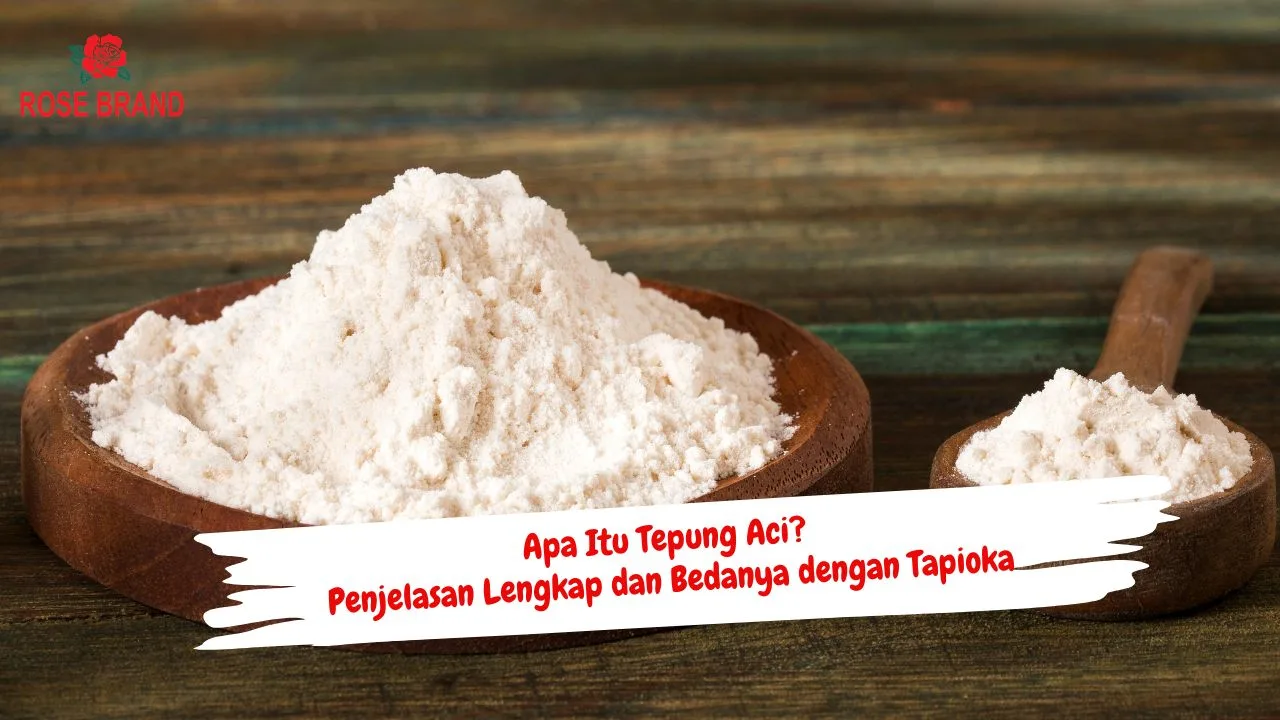
If you ever get confused when a cireng recipe asks for aci flour while the kitchen has tapestry, you're not alone. And this is one of the most often-sought Indonesians on Google, starting with "flour is flour" to "acel flour equals tapestry or not." This confusion is common because the name of flour in Indonesia is many and often overlap between the region name, the market name, and the official name.
This article will tell you in full what the flour is, what it's made of, the description, the use of it in the kitchen, the content and the benefits, until it's different from tapioca, sagu, maizene, and wheat. In the end there is also the answer to the question most often asked so that you don't get it wrong again.
What is that Aci Flour
The aci flour is another name of tapioca flour, which is the starch extracted from the tapioca. So the quick answer to the question that's most sought out, "flour is what flour is," is: aci flour and tapioca flour is the exact same ingredient, just different mention.
The word "aci" itself comes from Sunda meaning starch or sari. That's why they're so popular in West Java and they use so much to call tapioca-based snacks like cilok, Cireng, and Cimol. Some of the names you often meet for the same material among others:
- The tapioca flour: official and most common names are used in product packaging.
- Aci Flour: popular names in Sunda area and in the world of jackals.
- Surround the kanji: another name that also refers to the same cassava starch.
- Singulation based on the materials, although technically it's intact a little bit different than the pure starch.
The Aci Flour Made of What
The aci flour is made of cassava (https: / / id.wikipedia.org / wiki / Ubi _ wood) or tree kema. It was taken not all of his flesh, it was taken only. The process starts with a peeling, sharpened, then squeezed and washed to separate the starch from the fiber dregs. Then it becomes a fine flour.
Because all that's taken is the roof, the aci flour is almost pure carbohydrates without fibers and no gluten. In modern-scale production, the extraction and drying process is done hygienically with a processing technology that keeps the colors clean and textures smooth, so the outcome is consistent from one pack to another.
Aci Flour Ciri
Knowing the acetate is actually easy if you know what to pay attention to:
- Color: clean white, sometimes a little sparkly.
- Texture: so smooth and slippery when it's hit, often feels "crunchy" light when pressed between fingers.
- Taste: barely fresh or neutral, has no strong scent.
- When cooked behavior: when exposed to hot water, quick aci flour turns to thick, clear and chewy like elastic glue.
The most distinctive thing that separates the acorn from the other flour is a chewy, ripe quality. This is why Cireng and Cillok have a typical view texture, something that can't be imitated by flour or rice flour.
The benefit of Aci Flour in Kitchen
Aci flour is one of the most versatile ingredients in the Indonesian kitchen. It could be grouped into several major roles.
Main Supply and Market Jaban
This is the most famous role of aci flour. Most of the Indonesian chewy dishes use this flour as the main ingredient, like Cireng, Cillok, Cimol, Content Cireng, to the Plate. The aci flour gives the texture of chewy and see that's the characteristic of the nusantara market. Many of Cireng's efforts and Cillok rely on aci flour as a base of its production every day.
The Hefty Texture Giver
In Bakso, Batgor, Siomay, and Otak- brain, aci flour mixed with meat or fish to give reality and tether. Without aci flour, meatballs will be too mushy and crumbled when boiled.
Master material
Because it thickens quickly when it gets hot, aci flour is often used to irritate gravy, sauce, or filling. The results are more clear than marmalade, so it's a good match for sweet acid sauce or the stuff that wants to look shiny.
Traditional Cake material
The acic flour also comes in many wet cakes and traditional cakes such as Ongol-ongol, pancake, and Jongkong, where it gives you soft and chewy texture. You can find all kinds of flour for this traditional cake needs.
Aci Flour Concourse
In nutrients, aci flour is almost entirely carbohydrate in the form of starch. It's low on protein, it barely contains fat, and it has no mean fibers. According to USDA FoodData Central (https: / / fc.na.usda.gov /), tapioca gives a pretty high energy per sample, almost entirely comes from carbohydrates.
Some practical benefits of aci flour:
- Gluten-free, so it's safe for people who are sensitive to gluten or undergoing gluten-free diets.
- It's easy to digest because it's pure stardom.
- It powers the carbohydrates fast.
- It has no dye or natural taste, so it's neutral for many cuisine.
For the record, because the high-carbohydrate flour and other low nutrients, should be consumed as part of the balanced menu. Combine the flour with protein and vegetables to keep your daily intake fully nutritious.
Aci Surround Divergence with Other Conditions
This part is important because a lot of people are switched between aci flour and other similar flour. Here's an explanation.
Aci vs. Tapoka Flour
They're the exact same. Aci flour is a popular name, whereas tapioca flour is the official name that's usually written in packaging. So if the recipe asks for aci flour, but you only have tapioca flour, just use it without worrying.
Aci vs. Flank Kanji
Kanji flour is also referring to the same singkong starch. Aci, tapioca, and kanji are three names for one ingredient. The difference is pure in the common mention of each other's territory.
Aci vs. Flour Sagu
This is a very misunderstood distinction. The aci-grain comes from the tambourine, while the sago flour comes from the tree trunk. They both produce the same texture so often thought they can replace each other, but the materials are different. Sagu is usually a little bit more violent and has a special scent.
Aci vs. Float Maizena
Maizene flour is made of corn starch, not cassava. Maizena gives the texture softer and creamy when it thickens, suitable for vla and pudding, while the acia flour produces a more chewy and looking texture. Both can't be exchanged recklessly if you're chasing a certain texture.
Flour of Aci vs. Flour
The flour is made of wheat and contains gluten, so it's suitable for bread and cake that needs to expand. The acid flour doesn't contain gluten and can't expand like wheat. The function is different: it's for structure and volume, for reality.
Aci vs. Rice Flour
The rice flour is made from smooth ground rice and produces a more delicate and fragile texture, suitable for cake like rice cakes or fudge. Aci flour gives sense, while rice flour gives softness, so they're both often combined in one recipe.
General Error while using Aci Flour
Some mistakes often occur and some way of avoiding them:
- Thought the aci flour was different from the tapioca and bought both. They're identical, so just buy one.
- Pour water too fast into the hot dough so it clots. Let's get some ice flour with a little cold water before it goes into the hot gravy.
- Using aci flour to make a cake that has to be like a bullet. The aci flour doesn't have gluten, so the results will be a pillow.
- Keep it in the dampers so it clots and is moldy. The acid flour is so absorbent, it has to be completely dry and sealed.
- Using too much acic flour on the meatballs so that the texture becomes too visible and hard.
How to Save Aci Flour
An aci-grade flour is durable as long as it's stored properly. Put it in an airtight container in a cold, dry, and far away from direct sunlight. Because starch is easily absorbing moisture, avoid putting it near a stove or a sink that is often exposed to water vapor.
In good storage conditions, aci flour can last months until a year past. The aci flour marks are not worth wearing between the other appears to be a hard blob, a strong stink or a klutz, discoloration to brass, or lice and fungi. For a more complete food safety guide, you can refer to the official information from BPOM (https: / / www.pom.go.id /). When it's in doubt, it's better not to use it.
Select Quality Aci Flour
The oils are both clean white, no spots or discoloration, the texture is evenly fine, and it doesn't reek. The packaging is sealed shut and the date of expiration is a sign of a quality-kept product.
As a local Indonesian brand that has over 45 years accompanied the nusantaran kitchen, Rose Brand featuring tapioca flour or aci flour processed with modern technology so that the color is consistent with clean white and the texture is stable in each pack. The products are available in many sizes, from housekeeping to industrial scale for culinary vendors, and they can be bought easily through Shopies, Tokopedia, and Bukalpak. With consistent qualities, you can make Cireng, Cilok, and meatballs with the same chewy texture every time you cook.