
 ROSE BRAND
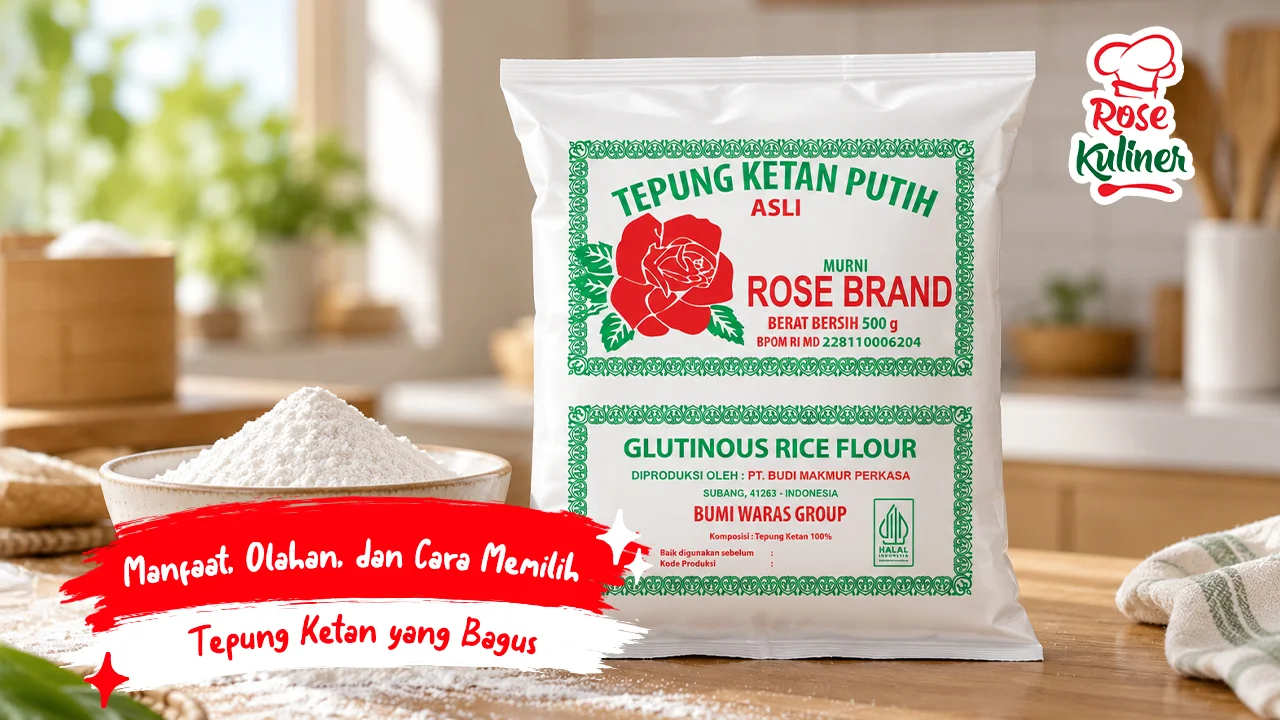
A lot of people stand in front of the flour rack and get confused. It's a similar package, it's white, and it's called close together: rice flour and glutinous flour. They can't replace each other. Choosing wrong, the cheddar that should be chewy breaks when boiled, and the ondeonde that is expected to expand is even louder.
This article talks about glutinous flour as a whole, starting with the materials, the traits that tell the difference from other flour, content and benefits, the opulence that can be made, the usual mistakes, how to save, to choose good glutinous flour for the kitchen and the culinary effort.
What is that Sticky Flour
Sticky sticky flour is flour made from sticky sticky glutinous rice. Its main signature lies in the content of starch dominated amilopectin, which is the kind of starch that makes the dough sticky, chewy, and look after it's cooked. It's this character that makes glutinous flour mandatory in many Indonesian markets.
In the market, glutinous flour is present in some forms that you need to recognize:
- White sticky flour: made of white glutinous rice, clean white, and most commonly used for Klepon, Ondeonde, and my cake.
- Black glutinous flour: made from black glutinous rice, black purple, with a stronger scent and a more legit flavor.
- Puffy flour: Another term for glutinous flour commonly used in Sumatra and Malaysia. Same materials and functions.
Even though his name contains glutinous words, it needs to be confirmed that glutinous rice (https: / / id.wikipedia.org / wiki / rice) remains with rice. It just has a different composition of starch than regular rice.
What is the sticky sticky rice
Sticky sticky rice flour is made of sticky rice, not cassava, sagu, or corn. Sticky rice is chosen, cleaned, then soaked to soften the bubbles. After that the rice was ground to smooth, drained, and sifted to the texture of the uniform.
The fundamental difference between glutinous rice and rice usually lies in its content. The average rice has two types of starch, which is amilosa and amilopectin, in a fairly balanced proportion. Sticky rice is almost entirely amilopectin. Amilopectin is very binding to water and produces sticky textures, so the resulting flour behaves very differently when cooked.
On a modern scale of production, the milling and drying process is done hygienically with machines, so water levels are controlled and flour is not easily clotted. The control of this process determines whether a glutinous flour will be consistent from packing to packing or not.
Perspective Sticky Flour
Recognize glutinous flour will directly save you from misgrabbing on the kitchen shelf. Here are the most easily observed traits:
- Color: white is clean and tends to be thicker than a slightly more faded rice flour.
- Texture: Fine but feels a little heavier and denser when held.
- The behavior of grasping: tends to clench and maintain the shape of a fist, not straight as rice flour.
- Raw flavor: tasteless, almost no sweet or savory flavor.
- Behavioral while cooking: quickly absorbing water, forming a smooth, elastic, very sticky dough.
The most decisive member is the last. As soon as the sticky rice meets hot water, the dough turns to chewy and looky. There's no other white flour on the kitchen rack that gives you that texture.
The use of sticky rice in the kitchen
This is the most decisive part of why glutinous flour is always available in the kitchen. The function is irreplaceable.
The Hefty Texture Giver
The main function of glutinous flour is to present a typical chewy texture. The adonan that uses glutinous flour will feel limber when bitten and not easily crushed. This character that makes Klepon feel chewy outside before the red sugar melts inside.
Market Jaban Major
Sticky flour is the backbone of many traditional Indonesian cakes. Some rice flour is the most popular of all:
- Klepon: Green balls containing red sugar, boiled to float.
- Ondeonde: Fried, sesame-plated, with green beans.
- My cake: red cake with turtle-driven texture.
- Wingko Babat: Roasted with broiled coconut and sugar.
- Candil porridge or Grendil Manage: little sticky rice balls in a sugar-and-hot pot.
- Salak seeds: like a chandelier, often presented as a Bible.
- Sengkulun cake: Betawi cake is legit and chewy.
For steamed and boiled pastries, the quality of flour is decisive. The flour too rough will make the surface of the cake seem sandy, while the dank flour makes the dough difficult to form.
Fried Sneak and Dry Cake
Besides the wet cake, sticky rice flour is also used for dry snacks. Kribo beans, egg beans, and various crispy crackers utilize the sticky flour properties that produce a layer of crispy but not hard.
Adonan Bind and Binding
In a small portion, sticky flour can help bind the dough so it doesn't break. This function is visible in a mixture of roll omelette skin or layers on some steamed cake. For this kind of use, you can consider a series of flour Rose Brand which is available in various packaging, from household to large size to production needs.
Solitude and Perpetual Flour Utilities
Nutritious, glutinous flour dominated carbohydrates. In 100 grams of glutinous flour there are about 360 to 370 calories, with 80 grams of carbohydrate content, proteins about 6 grams, and very low fat. The fiber and microntical content is small, except for the black sticky variant containing anthosianine, which is natural pigment that acts as antioxidant.
The practical benefits of glutinous flour in food processing include:
- A fast energy source. The carbohidrake content the glutinous flour and fit as a padded snack.
- Gluten-free naturally. The gluten rice does not contain gluten, so the glutinous flour can be an option for those who avoid gluten (https: / / www.Healthline.com / nutrition / what-is-gluten). For the record, his true nature comes from amilopectin, not from gluten.
- Easily digested. The gentle texture is that it makes glutinous flour relatively friendly in the stomach.
- Generates textures that other materials cannot replicate. From the culinary side, this is the biggest benefit.
Even so, it's important to be balanced. Because the carbohydrate content is high and the glychemical index is high, the glutinous flour is best consumed and balanced with protein, fiber and vegetables. For diabetics, consumption needs to be noticed more carefully in terms of health care as the Ministry of Health described (https: / / kekes.go.id /).
The difference in sticky flour and other ingredients
This section answers the most confusion that comes into the kitchen. The difference is real and it directly affects the product of the dish.
Stiff and Rice Flour
They're both made of rice and they're both white, but they're different kinds of rice. The rice flour is made of ordinary rice that contains amilosa high enough, so the exercise is texture soft, rather fragile, and not sticky. Sticky sticky rice is made of amilopectin, so it's chewy and look.
And for the record, the bread cake and Nagarsari wear rice flour because it requires a gentle texture. Klepon and Onde-onde wear glutinous flour because it requires reality. Trading both will drastically change results.
Tapoka flour and flour
The tapioca flour is made of tapestry, not rice. Tapioka produces more slippery and clear texture after cooking, such as on Cireng and Plates. Sticky flour produces denser, contains, and remains blurred. Both can't just replace each other.
Stirring and Flour Sagu
Sagu flour comes from the trunk of a sago tree. Like tapioca, sago is pure starch that produces chewy and clear texture. Sticky rice flour is not pure starch because it still carries protein and fat from glutinous rice, so it tastes more full and smells more flavour.
White sticky rice flour and black sticky rice flour
The difference lies in the type of glutinous rice used. White sticky rice flour, neutral taste, and suitable for cake that requires bright colors. Black, thick, purple sticky flour, has a stronger scent, a more legit flavor, and it contains antosianine. Black rice is usually used for black rice porridge and cake cakes that show dark colors.
Flour and Flour
The flour flour comes from wheat and contains gluten, a protein that forms elastic tissue when it's woven. Sticky flour doesn't contain gluten at all. Because of that sticky rice dough can't expand like bread, and flour can't produce Klepon's typical veracity.
General Error while Using Sticky Flour
Most failures in glutinous flour come from some of the following:
- Pour water at once. Sticky rice flour absorbs water fast. Pour too much water at the same time making the dough mushy and not forming. Pour it in a little bit while it's caressing.
- Using cold water for all the dough. For Klepon and Onde-onde, some warm water helps the dough become more flexible and not easily cracked.
- Replacing it directly with rice flour. This is the most common cause Klepon broke when boiled. Both flour have different functions and don't replace each other.
- Not on a specific recipe. On some pastries, the sticky rice flour is preemptive to reduce water levels and remove raw aroma. Passing through this step makes the results feel lumpy.
- Cue too long. As opposed to bread dough, glutinous flour dough doesn't need to be rinsed long. Just up to the line and it can be formed.
- Boil it with fire too big. Hard-rollin water can make the dough balls collide and break.
How to Save Sticky Flour
Sticky flour is a lasting material, but very sensitive to moisture. Keep it in an airtight container, somewhere cool, dry, and away from direct sunlight. Avoid storing it near the stove or the sink because the steam and water will speed up the damage.
In good storage conditions, glutinous flour generally lasts six to twelve months since it opened. Always notice the expiration date on the package.
Inappropriate sticky sticky flour shows the following signs: it clots hard and can't be sired, it smells muted, it smells musty or ugly, changes color to brass or motherly, and there are bugs or bugs. If one of these marks shows up, it better not be used flour. The proper dry food management is part of the food security (https: / / www.pom.go.id /) which must not be ignored, especially for culinary workers.
Pick out a nice sticky stick
Quality sticky flour has some easily recognized markers. It's white, clean, with no dark spots. The texture is smooth and uniform, unsandy. It smells neutral, unruly. The packaging is sealed, untorn, and it lists the date of production and expiry clearly. What doesn't matter, the flour gives consistent results from packaging to packing, so your recipe doesn't need to be changed every time it buys.
This consistency is the reason many traditional pastry makers and culinary entrepreneurs vote tepung ketan Rose Brand. As a local Indonesian brand who has been present for over 45 years, Rose Brand manufacturing glutinous flour is hygienic with modern technology, with the control of the water level and the subtlety that's awake. The products are available in various packaging sizes, from 500 grams for household needs to be made, to large packages for production scales, and can be easily obtained through Shopping, Tokopedia and Bukapak.
At practice, choosing proper glutinous flour means reducing the risk of failure. For the kitchen, it means the unbroken Klepon and the Onde-onde are expanding perfectly. For a businessman, that means the produce of a uniform every day, less dough is wasted, and the customer gets the same taste every time he buys.