
 ROSE BRAND
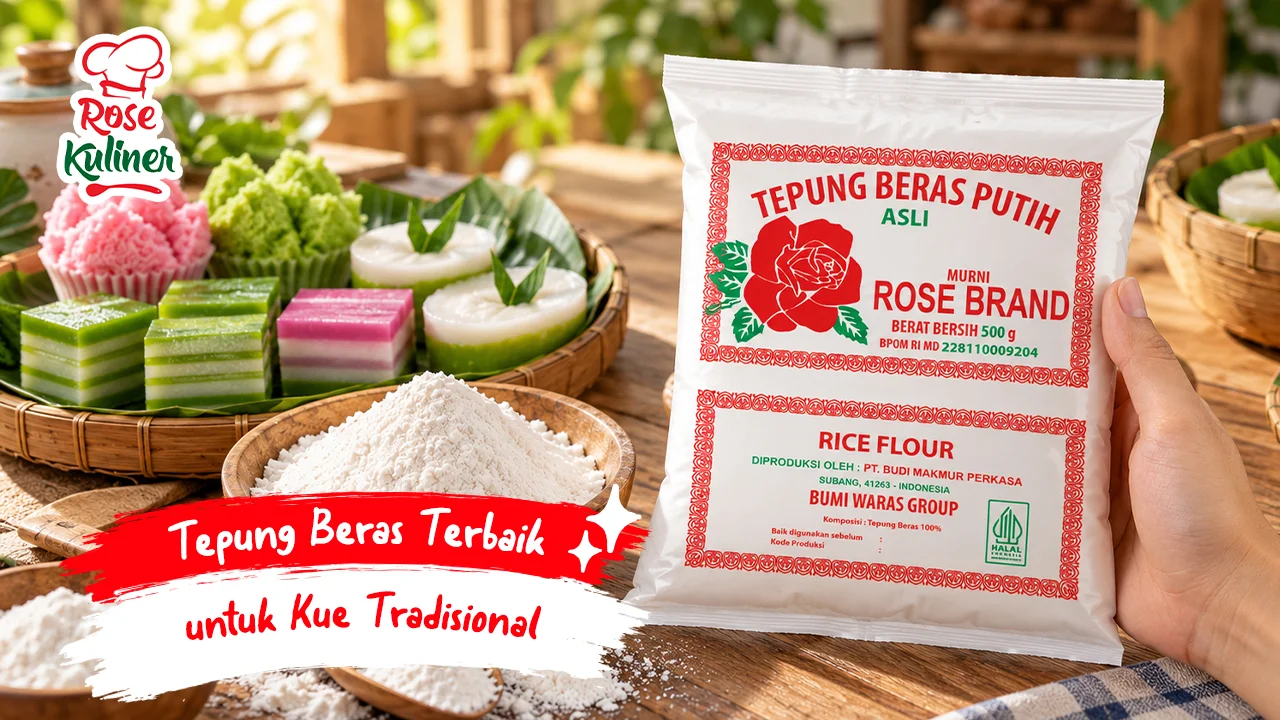
Many traditional pastries have experienced the same. Adonan has been prescribed, the measure is fitting, but the results remain out of expectation. Cake
Many traditional pastries have experienced the same thing. Adonan has been prescribed, the measure is fitting, but the results remain out of expectation. The filtered cake that should be chewy is fragile, the soft Cendol is sandy, and the Serabi that should be porous is a pillow. It's often not on recipes, it's on rice flour.
The rice flour is the backbone of almost the entire Nusantara market, and its quality determines the final texture of the dish directly. This article is fully discussed about what rice flour is, from what it's made of, it's a good quality of rice flour, it's used in the kitchen, it's used by tapestry, it's different with flour and flour, it's often used by using it, how to pick the best rice flour for household or culinary effort.
What is rice flour
Grass rice is flour produced from a mill of white rice pellets into fine particles. The function in the Indonesian kitchen is very distinctive, which is to give soft textures and a little bit of chewy dough, without making it look. Because it doesn't contain gluten, it doesn't form elastic tissue like wheat flour, so it's suitable for a cake that relies on softness, not development.
On the market, there are some terms that often trade for rice flour. Here's a brief explanation:
- White rice flour: the most common rice flour, made of ordinary white rice and became standard for most of the market japanese recipes.
- Red rice flour: it's made of red rice, it's brown, it's a lot higher, and it's stronger.
- Sticky rice flour or rice flour: made of sticky rice, much more sticky and chewy, not direct replacement rice flour.
- Rice float: English term for rice flour, often encountered in import product packaging.
What rice flour is made of
The materials are simple, the white rice that's been cleaned out of dung, gravel and grain. The manufacturing process is generally through several stages. And the rice was soaked, so that it might be melted, and then they were drained, and they were used to lower their water, and the last was to make them into uniforms.
The milling and milling stage is what determines quality most. The quality rice flour is ground-up until the particles are really smooth and consistent, so it's easily dissolved in fluid and it doesn't leave a sandy sensation in the tongue. The proper drying is also important, because the high water levels make fast flour clots and risk molding.
In the production of modern industrial scales, this whole stage is done in a hygienic and controlled environment. The drying temperature, the subtlety of the grind, and the water levels are maintained so that each pack gives equal results. This is why rice flour tends to be more stable in its results than traditional flour grinder that can be different between batches.
Good rice flour
Before buying or opening a new package, there are some things that can be checked immediately. The following traits help ensure flour is still viable and qualified:
- Color: white clean and evenly, no brass, no motherly, and no dark spots.
- Texture: smooth and light when held, feels a little slippery on the finger, neither rough nor sandy.
- Aroma: neutral and a little bit of rice, no coolness, no acid, and no stink.
- Quill conditions: dry and easy to pour, not clot or muzzle.
- Behavioral when cooked: evenly dismal in cold fluid, then slowly thickening when heated, resulting in a soft texture that is slightly chewy but remains soft in cold.
The most typical thing that distinguishes it from other flour is the subtlety that feels slippery on the fingers, but the product remains soft and invisible. If flour feels sandy when it's rubbed between the fingers, it's likely that the grinder is less smooth and the cake will feel rough in the mouth.
The benefits of rice flour in the kitchen
This part is the most relevant to most readers, because rice flour has roles that can't be replaced in Indonesian cuisine. It could be grouped into categories.
Major Cookies Traditional and Market Jackets
Most of the Nusantara market stands on rice flour. The pastry relies on rice flour to get a slimy yet soft layer. Serabi requires fine rice flour dough to form typical pores when cooked on clay pans. Nagarsari, Talam cake, and Mangkok cookies also use rice flour as a main skeleton that holds the shape without making the cake hard.
Cendol and Dawet were the other most demanding examples of quality. The rice flour sockets are cooked so thick it's printed through a sieve, and only really smooth flour produces slippery and chewy cendol. The rough flour will break the nozzle and the sand.
Crispy Texture Giver to Fried
Besides for wet cakes, rice flour is used a lot in fried dough. A mixture of rice flour with flour produces crispy skin and not soft fast. The principle is simple. The rice flour absorbs less oil and doesn't form gluten, so the outer layer stays light and crisp longer.
Vegetables, Fried Bangs, Temp, and Fried Chicken will taste much crispy if half the flour is replaced with rice. For the best result, use a comparison of about one piece of rice flour to two parts flour flour, then adjust it to taste.
Encoding and Charging material
In some steamy cuisine and congee, rice flour acts as a soft tinkle. Sumsum porridge is the most obvious example, because the texture entirely depends on the finely constricted rice flour ability without becoming overthick like canjane flour.
For culinary and UMKM entrepreneurs, the consistency of this function is crucial. The subtle change of flour between purchases will instantly change the texture of the product, and the customer usually realizes it sooner than expected. Therefore, using rice flour from a brand with stable quality is far more profitable in the long run.
Berry Flour Concourse and Utilities
Nutritious, rice flour dominated carbohydrates as the main source of energy. In 100 grams of rice flour there are about 360 calories, with a relatively low protein and very low fat content. The gizzed profile can be traced further through databases like USDA FoodData Central (https: / / fdc.nas.usda.gov /) which record the food composition in detail.
Some of the practical benefits of others:
- It's naturally gluten-free, so it's safe for people who avoid gluten or have sensitivity to it.
- Speed energy source due to high carbohydrates.
- It's easy to digest, so it's often worn in porridge and a side meal.
- Neutral flavors, not covering the smell of sutan, red sugar, or pandan, which is the characteristic of traditional cake.
- Generates lower fried oils than all the dough.
It's worth noting honestly that the rice flour is high-carbohydrate and the glycemic index is not a low-grade. Therefore, the consumer should be balanced with proteins, fibers and vegetables to keep the diet balanced. Information about nutrition balanced can be read on the Ministry of Health page (https: / / www.kekes.go.id /).
General Error while using Rice Flour
Some of the following errors are often encountered, and most are easily avoided:
- Not grazing flour before it's worn. The bloated flour leaves the pellets in the dough and makes the cake uneven.
- Put flour straight into the hot liquid. The rice flour must be dissolved first in cold liquid or space temperature, freshly heated while being stirred, in order not to clot instantly.
- Trade rice flour for tapioca flour in the same measure. They both have different water absorption power and the results won't be the same.
- Stop stirring when the dough starts to thicken. The rice flour leaves quickly and easily burned at the bottom of the pot if not stirred constantly.
- Use an open flour. The rice flour absorbs the smell and humidity around, so the taste of the cake can be affected even though the expiration date hasn't passed.
- Ignoring fluid proportions. The rice flour demands the right amount of fluid instead of wheat, and a little excess water is enough to make the cake a pillow.
How to Save Rice Flour
True storage determines how long flour is worth using. Unopened and well stored rice flour generally lasts about six to twelve months as per date on packaging. Once opened, it should be spent in three months.
Keep flour in an airtight container, somewhere dry, cool, and far away from direct sunlight. Avoid keeping it near the stove, the sink, or the sharp smelling material like onions and spices, because flour absorbs the scent. For the longer storage, the sealed container in the refrigerator can extend a saving life at once to prevent the emergence of lice.
The flour sign is not worth using well enough to be recognized. The smell of coolness or acid, the color that turns brass, the hard blobs that aren't crushed when pressed, the black or green spots, and the presence of the bug is the reason to just throw it away. Safe food storage practice is also explained on the page of the Food and Drug Superintendent (https: / / www.pom.go.id /), and following the basic principles would help maintain the material quality in the kitchen.
Select Quality Rice Flour
After understanding the traits and functions, choosing the best rice flour actually runs on some concrete stuff. Make sure the pack is intact and sealed, without a tear or a single hole. Check the date of production and expiration date, then select the most recent one. Watch the color through the packaging if possible, and select the white one clean and evenly. Finally, choose a brand that's consistent, because this is what determines the end of the dish.
The consistency is the main reason why so many pastry makers and culinary vendors select tested brands. Rose Brand has been present since the late 1970s and has a history of over 45 years in providing kitchen materials for the Nusantara culinary. The rice flour is processed hygientically with modern technology, so the subtlety and water levels are awake from one pack to the next. Product is available in many packaging sizes, from household needs to business scales, and easily obtained through Shopies, Tokopedia, and Bukalpak.
The practical benefits feel direct. For home pastry makers, consistent flour means always chewy layered, always slimy cendol, and always porous pancakes. For the owner of UMKM and catering efforts, consistency means a recipe that doesn't need to be recalibrated every time it buys materials, products that are uniform from day to day, and customers that come back from taste and texture never change.