
 ROSE BRAND
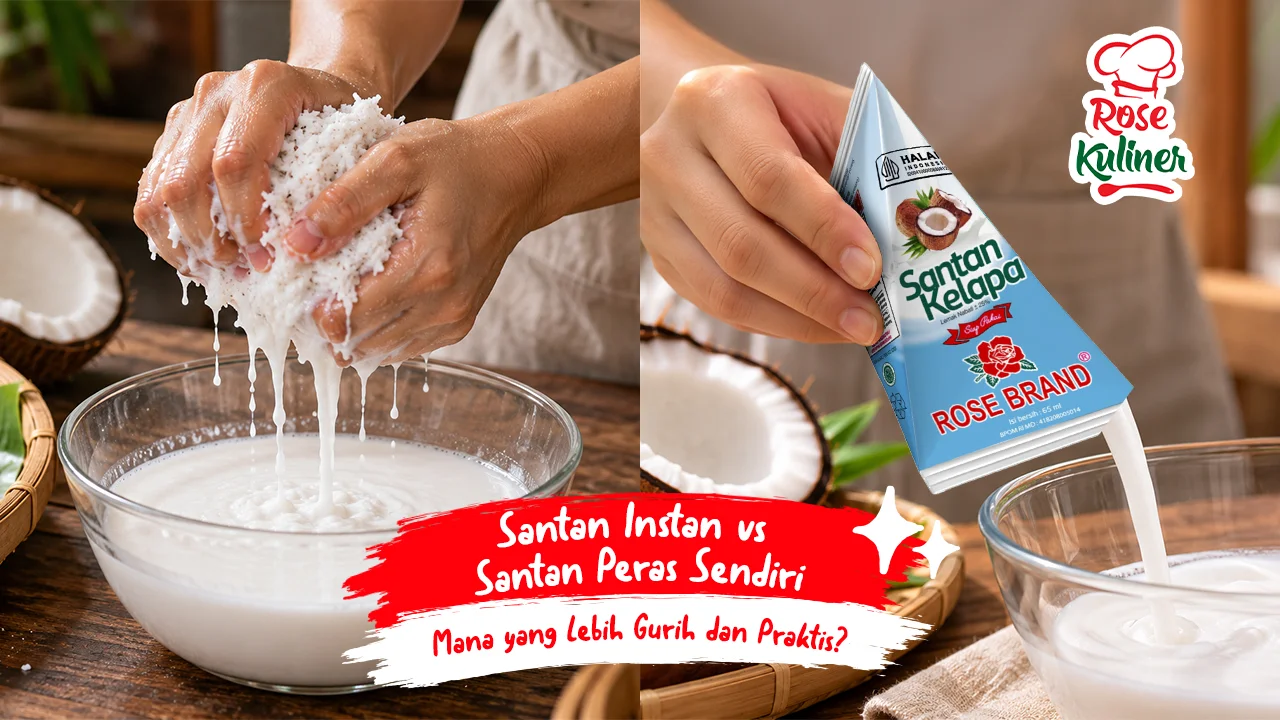
Every time you want to cook oport, lace, or cramp, a lot of people stop in front of the kitchen shelf and ask the same thing. Is it better to wear instant sutan that lives on the line, or squeeze your own sutan from a fresh scar coconut for a more authentic flavor? They both both produce savory gravy, but the process, it tastes, and the practice is clearly different. This article compares instant sand and self-wring milk, from taste, scent, texture, practicality, to save power, so that you can choose the most appropriate food of the day.
Is that the Instant Santan and the Self-Blackmail
Before comparing, it's good to understand each other's definition of not being mistaken. They both come from coconut meat, but they're very different.
Santan (https: / / id.wikipedia.org / wiki / Santan) is essentially a white liquid obtained from a stringed coconut meat. It's this liquid that gives the tastiest taste and aroma to many Nusantara cuisine. The main difference between instant sand and self-squeeze sand lies in how it gets to your pot.
- Instant sandan: factory-processed sutan and then packed up, either in liquid in a box pack or a sachet, or in a powder that lives in the water.
- The squeeze alone: the fresh milk you make yourself at home with the coconut scratch, mix it with warm water, then squeeze it out of the savory fluid.
- Thick sand and liquid milk: they can both come from instant sand and self-wring. Thick sand is the first squeeze that is more dense, while liquid soup is the second that is lighter.
How to Make Self-Squeeze Santan and Instant Santan Work · Global Voices
Understanding the process behind both helped explain why the taste and practice could be different. The process is opposite, one rests on the power of the kitchen, one on processing technology.
To make the squeeze of your own milk, the old coconut diluted in fine, then given enough warm water. The mixture was squeezed and blackmailed using hand or filtered cloth until it came out a deep white liquid. The first squeeze without a lot of extra water produces thick milk, while the next squeeze with more water produces liquid milk. It's simple but it takes quality time, energy and coconut.
Instant sand travels a different path. Fresh coconut meat is extracted in the factory, and then the liquid is separated, stabilized, and packaged in a hygienic way to last for a long time without losing its anger. In the powder version, the sandals are drained to dust which is just dissolved with hot water. Because it's processed with modern technology, instant santi offers ease that the squeeze of the manual.
Taste and smell comparisons
For many cooks, taste is the first consideration, and this is where the difference is the most felt. Even though it's all the same, it's not identical.
The self-wringing sand is generally superior to the fresh side. It smells more like a brand-new coconut, it tastes more full, and a lot of people judge fresh congee cuisine has a deep, hard taste. This is why some people keep squeezing their own sutan for special dishes such as a pot or an Oport spread.
Modern instant sand is very close to fresh milk, especially to daily cooking. The jealousy is consistent from packing into packing, something which is rather difficult to achieve when self-wringing because the level of mercy can be different depending on the young coconut. For soup, tummies, drinks, and cookies, the difference in taste is often barely felt on the tongue.
Time and Practice Compliance
In addition to taste, time factors make choices, let alone the busy ones. In this aspect, instant punctuality is hard to dispute.
Blackmail yourself requires a pretty long process. You need to buy a coconut, you need to park it, you need to have it sharpened in the market, you need to prepare warm water, then squeeze and filter it. Not to mention cleaning the dregs and the equipment afterwards. The total amount of time could reach a dozen minutes just to prepare the materials, before cooking really starts.
Instant sand trimmed almost all those steps. Enough of the packing scissors and the pour, or dissolve the powder with hot water, and the coconut is ready to go in seconds. For busy housewives, culinary people, and catering businesses that have to cook in large quantities, this practice saves time and energy significantly. For the scale of effort, the consistency of the instant amount also makes the taste of cuisine easier to keep the same every day.
Save and Hold Power Compliance
Storage aspect is often ignored, but it's very influential in practice everyday. The difference is quite striking between the two.
The squeeze yourself is easily stale because there is no stabilizing material. At space temperature, fresh sand only lasts a few hours before it starts smelling sour. Kept in a closed container in the fridge, fresh sand usually only lasts about a day or two. Therefore, squeeze milk should be used immediately after making it.
Instant unopened sand is far more lasting and can be stored months at room temperature, as long as the packaging is sealed tight. It makes it easier for you to stump the sutan without worrying about being broken quickly. However, as soon as the packaging is opened, instant sutant needs to be treated like fresh sand, which is kept in the fridge and soon spent. To understand the safe ways of storing groceries, food guidance from the Food and Drug Superintendent (https: / / www.pom.go.id /) can be a useful reference.
Santan Adjustment and Utility
Instant sand and self-milk comes from the same material, so the profile of the nutrition is relatively similar. The only difference is the possibility of an instant stabilizer.
Santan is rich in luscious fat that gives both savory and energy. It has fat, little proteins, and minerals like iron, magnesium, and potassium. Some practical benefits among others:
- It feeds the savory and texture creamy to the cuisine without adding extra milk.
- It's a source of energy because the fat is high enough.
- Carrying a special taste of Nusantara which is hard to replace other ingredients.
Keep in mind, santans (https: / / www.healthline.com / nutrition / coconut-milk) are high in fat and calories, so it should be consumed in fair portion and balanced with vegetables, proteins, and fibers. For those who manage the fat intake, reducing the frequency of the conch dish is wiser than avoiding it at all.
General Error while Using Santan
In spite of the selected kind of cider, there are some mistakes that often make food less satisfying. Avoiding him would make the gravy more savory and not easily damaged.
- Boil the sutan with a big fire without stirring it, so it burst and it clots oily.
- It's a little early in the old food, but it's better to add to the end.
- Let self-wringing sand stay in space temperature until it smells sour before it wears on.
- It takes the right amount of water when it dissolves the powder, so it gets too thin.
- Keeping the instant remains that have been opened outside the fridge, making it stale quickly.
When Should Select the Instant Santan and When Expression Alone
There's no single right answer to all the situations. The best choices depend on the kind of cuisine, the time available, and the scale of needs.
Blackmail yourself fits when you cook a special dish that relies on freshness of taste, such as Rendang, Oport, or Gulai for the great event. When the time is loose and fresh coconut is easy to get, the milky milk gives a satisfied result of the smell side.
Instant cantane becomes an intelligent choice for daily cuisine, limited time, or when you need a consistent measure. For drinks, cookies, tummies, to the production of culinary scale UMKM, instant snacks offer ease without a meaningful sacrifice. Many household kitchens even combine both, squeezing themselves for special moments and keeping instant sandwiches as a practical daily lead.
Select Quality Instant Santan
If you decide to use instant sand, the quality of the product determines the cuisine. Good instant mantis has clean white colour, natural aromatic aromatic aroma, flattened texture, and a salted taste without a strange taste.
This is where the brand's reputation becomes important. Rose Brand as a local Indonesian brand with experience over 45 years in providing quality kitchen materials for the nusantara culinary culinary. Santan product sequence Rose Brand it's been processed hygientically with modern technology so that the jealousy is consistent and practical. Available in various packing sizes for household needs to the industrial scale, products Rose Brand it's easy to find in Shopee, Tokopedia, and Bukalapak. With a quality-quality sandwich, you can still serve Opor, Kraut, or a savory pot without bother to squeeze coconuts every time you cook.