
 ROSE BRAND
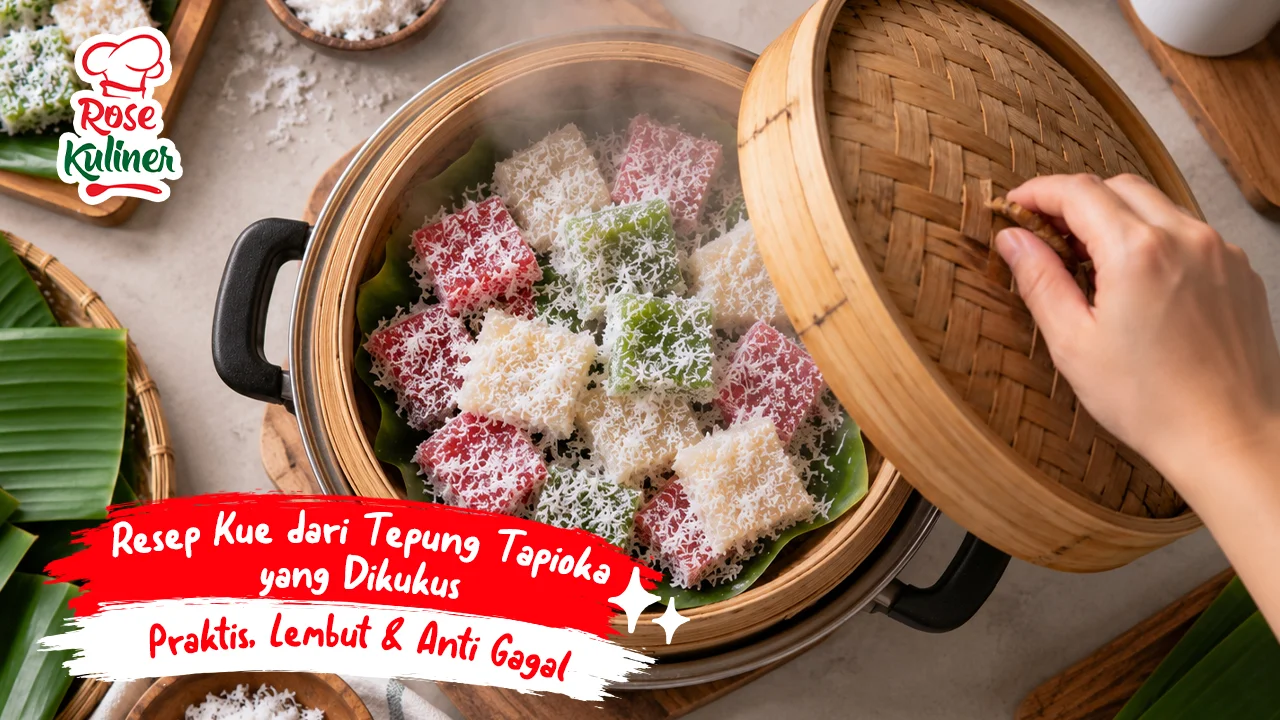
Not everyone has an oven in the kitchen, and the good news is most of Indonesia's traditional cake doesn't need it. Lapis, Ongol-ongol, Talam, until Nagarsari was all cooked up on a cooker with equipment that was normally available at home. The key is the right ingredient, and this is where tapioca flour holds a crucial role.
This article summarizes seven recipe cakes of simple tapioca flour that is fully cooked in a steamed way. Each recipe is a measure of material, a step up, and a little note to be consistent. In the end you will also find the common cause of the cake to fail, how to store the cake to stay chewy, and the guide selects quality tapioca flour.
Why is Tapoka Flour Fit Fits for Steamed Cookies
The tapioca flour is the starch that was taken from the tapioca. Contrary to gluten-containing flour flour and it takes dry heat from the oven to expand, but it works another way. The pellets absorb water and then expand when exposed to heat, a process known as gelatinization. The result was that the texture was chewy and a little transparent, which is typical of a lot of market food.
Because the mechanism is dependent on water and steam, the humidity of the mangrove becomes an ideal state. Adonan doesn't need to be developed with leaven or chemical developers, it doesn't need to be diluted, and it doesn't demand precision temperatures like roast. Just stick it flat, pour it into the window or print it, then squeeze it.
There are three tapioca characters that make it so reliable in traditional cake:
- Thin and supple. Cookies don't break easily when cut or rolled up.
- It's clear when it's ripe. The current addons of white milk turn into rather transparent, giving a glaring look at the cake.
- Neutral. Tapioka doesn't dominate, so the smell of pandan, the red sugar, or the sutan remains prominent.
Keep in mind that tapioca rarely stands alone. In many recipes, it's mixed with rice flour or hunkwe flour to balance the truth so the cake doesn't get too much. If you want to get to know more about this material character before you start cooking, there's a complete discussion of tapioca flour and its use in the kitchen.
The basic tools and materials to prepare
Before entering the recipe, it's best to prepare basic equipment first. The list is short and most of it is common.
- The cauldron pot or dashboard with the lid
- Clean napkin to wrap the scallop
- The square lotion is 18 x 18 cm or 20 x 20 cm, talam cake prints, or small cup
- Filter smooth wire to filter dough
- The kitchen scales or the measuring glasses
For the material, the following five components appear repeatedly in almost all recipes: tapioca flour, rice flour, milk, sugar, and a little salt. Setting up all five at once will save time if you intend to make more than one kind of cake. The quality of lumpy sanctions determines the end, and the use of coconut sand is ready to make the measure more controlled than the squeeze of the coconut itself.
One small, impact habit: always wrapping the scabs with napkins. Water vapor that drips to the surface of the dough is the reason the number one freckle cake and watery talam cake.
Seven Cookies from Simple Tapoka Flour Without Oven
The seven recipes below are composed of the easiest to the least challenging. Everything uses tapioca flour as a material or a companion material, and is fully cooked in a steamed way.
1. Red Sugar Tapoka
This cake is the best starting point for a rookie because it only takes one pot and one loyang. The texture is chewy, it's sweet, it's red sugar, and the marinade coconut sprinkles give it a balanced flavor.
Materials:
- 150 grams Tepung Tapioka ROSE BRAND
- 200 grams of red sugar, smooth comb
- 500 ml Air
- 2 sheets of pandan leaf
- Salt Laborsdt
- 150 grams of half-old coconut
- Sales (for coconut)
Make Way:
- Wrap a salt-mixed coconut for 10 minutes, then set it aside. This move makes coconut less stale.
- Boil water with sugar and pandan leaves until the sugar is complete, then filter and keep warm.
- Reduce Tepung Tapioka ROSE BRAND and salt with warm sugar water, stir it up completely unstirred.
- Pour it into the low-oiled lotion, then steamed for 25 minutes by medium fire.
- Chill up the temperature of space, cut the box, then roll over the steamed coconut scar.
Tip: Ongol must be really cold before cutting. If it's still warm, the texture will be sticky and difficult to release from the log.
2. Rainbow Tapoka Layer
Pancakes or pepe cookies are the most iconic steamed cakes that rely on tapioca. The process requires patience because it's steamed layer by layer, but the materials are simple and the results are always satisfactory.
Materials:
- 200 grams Tepung Tapioka ROSE BRAND
- 100 grams Tepung Beras ROSE BRAND
- 200 grams of Sand Sugar ROSE BRAND
- 700 ml Santan (200 ml ROSE BRAND + 500 ml of water)
- Half-sdt Salt
- 2 sheets of pandan leaf
- Just enough
- Enough Minyak Goreng ROSE BRAND (for polishing)
Make Way:
- Santan stew ROSE BRAND with leaves and salt to warm, we must not boil to break. Lift and chill.
- Mix Tepung Tapioka ROSE BRAND, Tepung Beras ROSE BRAND, and Sand Sugar ROSE BRAND in a large container.
- A warm pot of sand, little by little while stirred, and then the dough filtered to be smooth.
- Split the dough into three parts, give it red, green, and leave one part with no color.
- Heat the manga, oil the loYang with Minyak Goreng ROSE BRAND, then pour one spoon of vegetable dough and steamed 5 minutes.
- Repeat layer by layer with color in shifts until the dough runs out, steamed the last 20 minutes.
- Chill for at least three hours before you cut it with an oiled plastic knife.
Tip: Don't be tempted to pour the layers too thick to finish quickly. Thick layers are uneven and make cake easily separate when cut.
3. Talam Pandan Flour Tapioka Cake
There are two layers of fine silk and sweet-smelling bottom. This combination keeps him on the market table.
Green Layers:
- 100 grams Tepung Tapioka ROSE BRAND
- 100 grams Tepung Beras ROSE BRAND
- 150 grams of Sugar Sand ROSE BRAND
- 450 ml Santan ROSE BRAND (diluted)
- 2 sdm Air squeeze suji leaves or pandan pasta
- Salt Laborsdt
White Layers:
- 50 grams Tepung Beras ROSE BRAND
- 20 grams Tepung Tapioka ROSE BRAND
- 250 ml Santan ROSE BRAND
- Half-sdt Salt
Make Way:
- Mix all the green layers, stir them up late, then filter.
- Pour into the talam print up to two-thirds full, 15-minute steamed.
- While waiting, mix and filter all white matter.
- Pour a white layer over a half-baked green layer, then wrap it back up in 15 minutes.
- Chill out before it's out of print.
Tip: The neat Ark key is to pour out the second layer when the first layer is set but the surface is still a little sticky. If it's too dry, both layers will easily come off.
4. Bananas Nagarsari
Nagarsari mixed rice flour and tapioca with sand, then wrapped a banana leaf with banana slices in it. The smell of banana leaves getting steam is the part that makes the cake special.
Materials:
- 100 grams Tepung Beras ROSE BRAND
- 50 grams Tepung Tapioka ROSE BRAND
- 500 ml Santan (200 ml Santan ROSE BRAND + 300 ml Air)
- 100 grams of Sugar Sand ROSE BRAND
- Salt Laborsdt
- 2 sheets of pandan leaf
- Four peppers or a king
- Just enough banana leaves
Make Way:
- Mix Tepung Beras ROSE BRAND, Tepung Tapioka ROSE BRAND, Sugar Sand ROSE BRAND, and salt, then pour Santan ROSE BRAND little by little while it stirred.
- Cook the dough on a little fire with the leaves as they're steadily stirred to the brim and burst.
- Lift it up, then grab a spoon of dough over a banana leaf.
- Put a piece of banana in the middle, close it back with a little bit of dough, then fold it and squeeze it.
- Steamed for 20 minutes to mature, serving after the cold.
Bits are required to be cooked until it's thick before it's wrapped. A thin hook will seep out of the leaves when they're steamed.
5. Green Lump Cake
Lump cake is easily recognizable from a small basin in in the middle of it that becomes a scar coconut hold. The real texture comes from a mixture of tapioca and rice flour.
Materials:
- 100 grams tepung Tapioka ROSE BRAND
- 75 grams Tepung Beras ROSE BRAND
- 150 grams of Sugar Sand ROSE BRAND
- 400 ml Air
- 2 sdm Air leaves suji / water pasta pandan
- Salt Laborsdt
- Silensdt limewater
- Enough steamed scar coconut (for sprinkles)
Make Way:
- Boil water with Sugar Sand ROSE BRAND it's late, it's lifted, then it's cold.
- Mix Tepung Tapioka ROSE BRAND, Tepung Beras ROSE BRAND, salt, and lime water, then pour sugar water while it's stirred and filtered.
- Add natural green dye of the suji leaf, mix evenly.
- Pour into the little mold that's been heated first inside the cauldron.
- Steamed for 20 minutes with a big fire until the middle part formed a basin.
- Fill the basin with steamed scar coconut before presented.
Tip: The heat-filled print before filling the dough is the secret of being a typical cake basin.
6. Sweet Cente Cake
Sweet Cent Cookies are known for the clear and chewy pearl pellets in the white potato dough. The cake is served in small cups so it's practical for delivery and sale.
Materials:
- 75 grams Tepung Tapioka ROSE BRAND
- 50 grams of hunkwe flour
- 150 grams of Sugar Sand ROSE BRAND
- 700 ml Santan ROSE BRAND (enlighten)
- Half-sdt Salt
- 75 grams of pearl sagu
- 2 sheets of pandan leaf
Make Way:
- Boil the pearl sagu in boiling water until it's clear, sterile, then sprinkle cold water.
- Mix Tepung Tapioka ROSE BRAND, hunkwe flour, sugar, and salt, and then pour sand while it's stirred and filtered.
- Cook the dough with the leaves of the pandan on the little flames while constantly stirred until it thickens.
- Put the pearl sagu, mix it flat, then pour it right into the little cup.
- Wrap it for 15 minutes, cool it, then put it in the fridge before it's served.
Tips: Pearl sagu should be put in the end to not be crushed and remain visible as a clear grain in the cake.
7. Purple Talam Cookies
This last recipe uses purple yams as a dye and a taster. The color is interesting without any artificial dye, and the texture is soft thanks to the combination of yams with tapioca.
Purple Layers:
- 250 grams of purple Ubi (steamed and hallucinated)
- 75 grams Tepung Tapioka ROSE BRAND
- 50 grams Tepung Beras ROSE BRAND
- 150 grams of Sugar Sand ROSE BRAND
- 400 ml Santan ROSE BRAND (enlighten)
- Salt Laborsdt
Santan Layers:
- 40 grams Tepung Beras ROSE BRAND
- 15 grams Tepung Tapioka ROSE BRAND
- 250 ml Santan ROSE BRAND
- Half-sdt Salt
Make Way:
- Mix fine purple potatoes with Santan ROSE BRAND which has been diluted, jumbled to a slick, then filtered.
- Insert Tepung Tapioka ROSE BRAND, Tepung Beras ROSE BRAND, Sugar Sand ROSE BRAND, and salt, stir it to the ground.
- Pour into the mold up to two-thirds full, 15-minute steamed.
- Mix the santan layer, filter it, then pour it over the purple lining.
- Wrap it back for 15 minutes, cool it before it gets kicked out.
Purple tiles should be steamed, not boiled. The stew Ubies absorb too much water so the dough becomes diluted and cake is hard to set.
General error while making steamed cake from Tapoka Flour
Most of the cookie failures come from small technical things that are actually easy to avoid. Here's what happens most often:
- No filtering dough. The undilated flour Gerindil will look as hard spots after the cake is cooked. It's always filtered before it's poured.
- Pour hot sutan into the flour. Too hot mantis makes the starch clench. Use warm nail santan and gradual pour.
- Kukusan isn't really hot yet. Adonan entering the cold cauldron will be uneven. Heat the stew up so hard first.
- Close the brush without a napkin. The water drops from the pot cap damage the cake's surface and make the lining not stick.
- Cut the cake while it's warm. Pati tapioka just harden completely after the cold. The ideal layer cake has been buried at least 3 hours.
- It's too much. The more tapioca, the more the texture. Follow the comparison with rice flour according to the recipe.
- Unlocking the frame too often. Temperature drops drastically and the cake layer can fail to merge.
How to save Tapioka Feast Cookies
Traditional steamed cake doesn't use preservatives, so it's short-lived. At room temperature, cakes like Ongol, Lapis, and Talam survive about a day, especially because of the stale coconut and coconut scars in the tropical climate.
For a longer storage, put the cake in a sealed container and then put it in the fridge for three days. The texture will harden when it's cold, but it'll come back after being steamed for 5 to 10 minutes or left at room temperature about 30 minutes before it's served.
Notice signs of damage in the scent of acid, mucus surfaces, or fungal spots. A cake with that kind of sign should be removed immediately. For the cake to be sold or used as a delivery, a food-handling guide from the Ministry of Health (https: / / www.kekes.go.id /) can be an reference to keeping the product safe during distribution.
Select Quality Tapoka Flit
The result of the cake was greatly influenced by the quality of the edge. Good tapioca flour is white, clean, dry, and slippery when held. It's smooth with no blobs, no musty smell, as well as a perfect night without leaving a rough snack on the bottom of the container. Solitary flour or clots usually absorb water vapor and risk making cake smell bad.
Loads are worth checking, too. Choose a sealed package, list a clear expiration date, and have a command number. Good tapioca flour information can help you recognize the quality difference before buying large amounts.
Rose Brand has provided kitchen materials for Indonesian households since the late 1970s, with more than 45 years of experience in supporting the preservation of nusantara culinary culinary preservation. Tepung Tapioka Rose Brand it's a very hygienic process with modern technology, so it's consistent with the subtlety and color from one package to the next, a very meaningful factor when you make a layer-plated layer cake or produce a large amount of market food. The size sequence is complete, from small packaging to household needs to large packaging to culinary vendors. It's widely available in Shopies, Tokopedia and Bukadak, and you can search the entire variant of products Rose Brand just what the kitchen needs.
With the right ingredients and the correct steamed techniques, seven recipes above enough to fill your own market table, without having to oven it at all.