
 ROSE BRAND
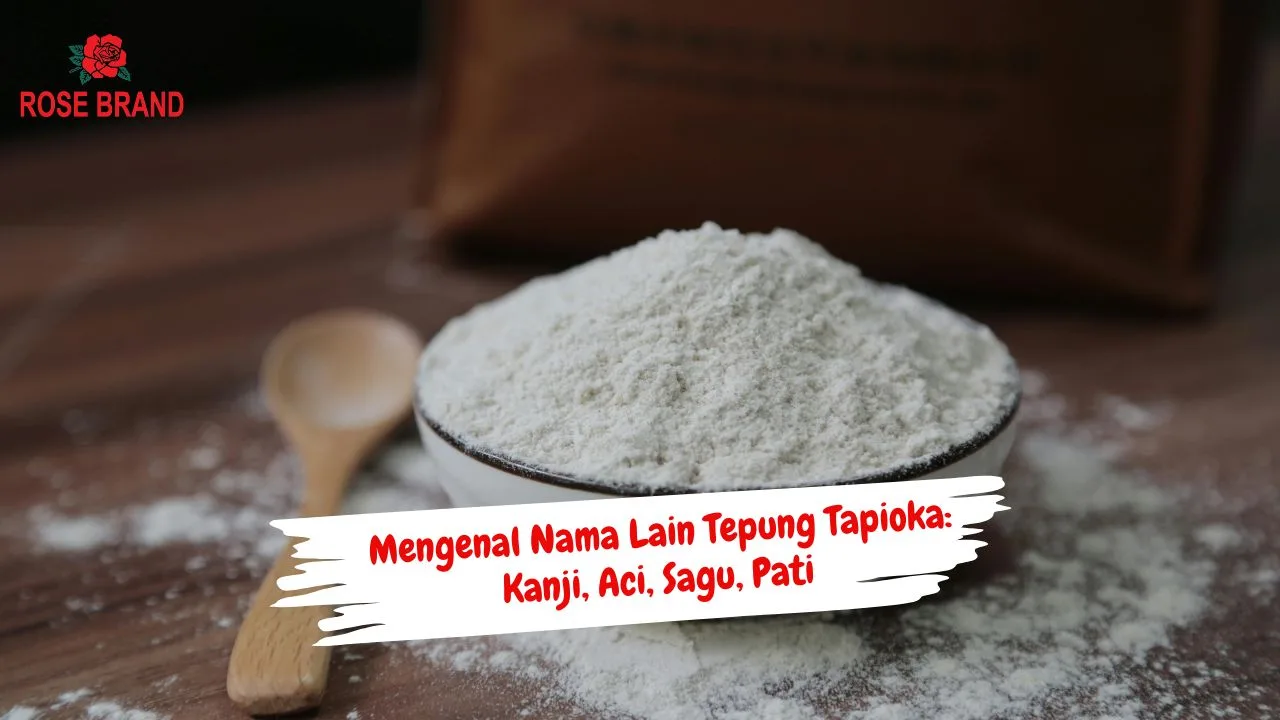
A recipe asked for canji flour, while others were almost identical to it called tapioca flour or aci flour. This kind of view often makes anyone doubt whether to buy new materials or use enough ones already available in the kitchen. The confusion is actually understandable, because in Indonesia, one type of flour often has several different names in each area, while there are other flour whose names sound similar even though the fundamental materials are not the same.
This article is present to tidy up the confusion thoroughly. You'll understand the name of the right name refers to the same material as tapioca flour, which is actually different, each of its origins, to how to pick them properly. That way, you can follow the recipe of any area without ever having any doubt in front of a flour shelf.
What is Tapoka Flour
The tapioca flour is the extracted starch of the Singuine Umi. The only piece that was taken was the temple, not the fiber, so it had a delicate texture, light, white, and almost no flavor. In the kitchen, the role is not to add flavor, but to give the texture chewy as well as to be a bender.
As a material that comes from cassava, tapioca flour has a characteristic trait, which is to turn it into chewy and clear when exposed to heat and liquid. It's the nature that makes it the main ingredient in all its favorite snacks. The thing is, this flour is circulating on the market with several names at once, and this is where all the confusion begins.
Another name The Tapoka Flour that Adjusts In The Same Materials · Global Voices
Some of the following names are actually pointing to the same material, which is pendejo. The difference between them is that of what they say. In general, canji flour and aci flour are the two most commonly used names in exchange for tapioca. In addition to these two, some people also call it cassava flour because they emphasize its origin, whereas in import products or exports, the term used usually is tapioca starch.
Those three local names, which are tapioca, kanji, and aci, can replace each other in recipes without changing the outcome. In other words, if a recipe asks for temporary flour in the house only available tapioca flour, they both remain safely used in turn.
"Fold Kanji."
Kanji flour is another name tapestry that most frequently appears in a day's conversation. In fact, there are less people who are more familiar with kanji than tapioca. This name is common for many needs, from making crackers, Cilok, and Cireng, to cutters. From the side of the material, canji flour and tapioca flour have no difference at all.
Aci Flour
Aci-land is what we call a cassava starch commonly used in West Java. The term aci is so etched with Sunda's signature, seen by a number of food names rooted in that word, such as Cillok which means the ocican is cocked and Cireng which means the aci is fried. Although it sounds foreign to some people outside West Java, the aci flour is essentially the same as tapioca flour or canji flour.
The materials are often the same when different
Not all white flour can be considered similar. There are some ingredients called often thought of as other names of tapioca flour, whereas their origins are clearly different. Understanding this difference is important so the food doesn't miss out on the expectations.
Sagu Flour
Sagu flour is often equated with tapioca flour because they're both equal to a chewy texture. In fact, their origin is different. The tapioca flour comes from the cassava, whereas the saguan flour comes from the palm of the tree (https: / / id.wikipedia.org / wiki / sagu). And the Sagu aren't known for what is made of the palm of the tree.
In the practice of the kitchen a day, sago and tapioca are often used interchangingly, for example to make Ongol or Plates. Even so, both are not entirely identical. The sago flour tends to dry up a little bit and absorb the fluid in a different way, so that in certain recipes results can eventually feel different.
Pati Garut Surround
The starch, especially the garrow, is also often considered equal to tapioca. In fact, the salt starch is made out of tubies, not cassava. The flour is known to be soft and digestive, so many are wanted for baby food as well as for those with stomach complaints. Because the base materials are different, the garland is not another name of tapioca flour, but rather its own kind of starch.
It's worth understanding anyway that the term starch has more coverage than tapioca. It can come from different sources, like cassava, corn, potatoes, and scratch. Thus, tapioca flour is indeed one kind of starch, but not all the starches can be called tapioca.
Maizena Surround
The maizene flour comes from the starch of corn, not the cassava. Although the same is white and often used as a dent, the outcome is different. Maizena provides a softer texture and a little creamy, while tapioca produces a more chewy and warped texture. Because of this difference in nature, the maizene and the tapioca cannot always replace each other.
Tapoka Surround Name in Various Territory
One of the main reasons a lot of names appear is the diversity of local languages in Indonesia. One of the same ingredients can sound very different depending on the location. In general, the public knows him as tapioca flour or canji flour. In West Java and Sunda society, this flour is better known as a tight-tongued flour with ties like cilok and Cireng. Meanwhile, in English-speaking packaging, usually the term that says tapioca starch or tapioca float.
The diversity of this name truly isn't a harbinger of a different substance, it's a reflection of the wealth of the nusantara culinary. By understanding it, you'll be more confident when you follow a recipe from anywhere in Indonesia.
Tapoka flour made of What
Given that a lot of people are curious about the origin of the material, it's good to understand how the flour is made. The tapioca flour, canji, or aci are the same as the cassava, or in scientific language the Manihot escucipasia (https: / / id.wikipedia.org / wiki / Keela _ trees). The process starts by peeling and washing cassava, then scrubbing and blackmailing to separate starch from fiber and water. The slurping of the grain is then dried up and melted down into fine white dust.
Because of using just the body parts, this flour is almost entirely composed of carbohydrates, low-fiber, gluten-free. The process of modern, hygienic production keeps the color clean so it's safe to use for different kinds of foods.
Divergence Summary
To make it easier to remember, here's a brief summary of the origin of each meal. The tapestry of tapioca, kanji, and aci came from the tapioca and all three are the same ingredients. Sagu flour comes from a sagu tree trunk or aren, starch starch from tuberculosis, maizene flour comes from the apple of corn, while rice rice comes from smooth ground.
The simple key is, if you mean the lion's starch, then tapioka, kanji, and aci are just three names for the same material. Beyond those three names, most likely you're dealing with a completely different ingredient.
The benefit of Tapioka Flour and Name Name in Kitchen
Because tapioca, kanji, and aci are the same ingredients, they're identical. This flour stands for the making of different markets and traditional nusantara cakes. In chewy foods such as Cillok, Cireng, Cimol, Bakso, Plates, and Cendol, this is the flour that presents the texture. On crackers and chips, he gave light and crispy results. In the watery cuisine, this acts as a dent that makes sauce and gravy seem clear and shiny, while on a miniscule drink, it becomes the base of a ball of chewy or boba.
Whatever the name is in the recipe, whether it's tapioca, kanji, or aci, you can use quality flour like Tepung Tapioka Rose Brand its texture is delicate and stable when cooked.
General Error About Surround Name
In order to avoid misbuying or misusing, there are some false assumptions that should be avoided. A lot of people think all white flour is the same, whereas tapioca, sagu, starch, and maizene comes from different ingredients. Some think it's the same as tapioca, but both have chewy but different effects of origin and not always identical.
Even if you think it's a tapioca, even if it's from a salt tuber. And those who disbelieve and change the religion of Allah for that which they have.
How to Select and Save Tapoka Flanks
The quality of flour affects the end of the dish, whatever the name is in it. Good tapioca flour is clean white, smooth, dry, not clotted, and it smells musty. To guard the mouse, keep the flour in a sealed container and place it in a dry and cool place, as far away from the sink. This is a good storage practice in accordance with the Ministry of Health's safety advice (https: / / www.kekes.go.id /) for food materials to be kept safe.
Rose Brand it's a local Indonesian food brand that has been present for over 45 years and is supporting the preservation of the nusantara culinary preservation. Tepung Tapioka Rose Brand it's a hygienic process with modern technology, available in a variety of packaging sizes for household needs to the scale of business, and easily obtained through Shopping, Tokopedia and Bukapak. With consistent flour, the results of Cillok, crackers, meatballs, and your artificial market food will be more chewy and satisfying.