
 ROSE BRAND
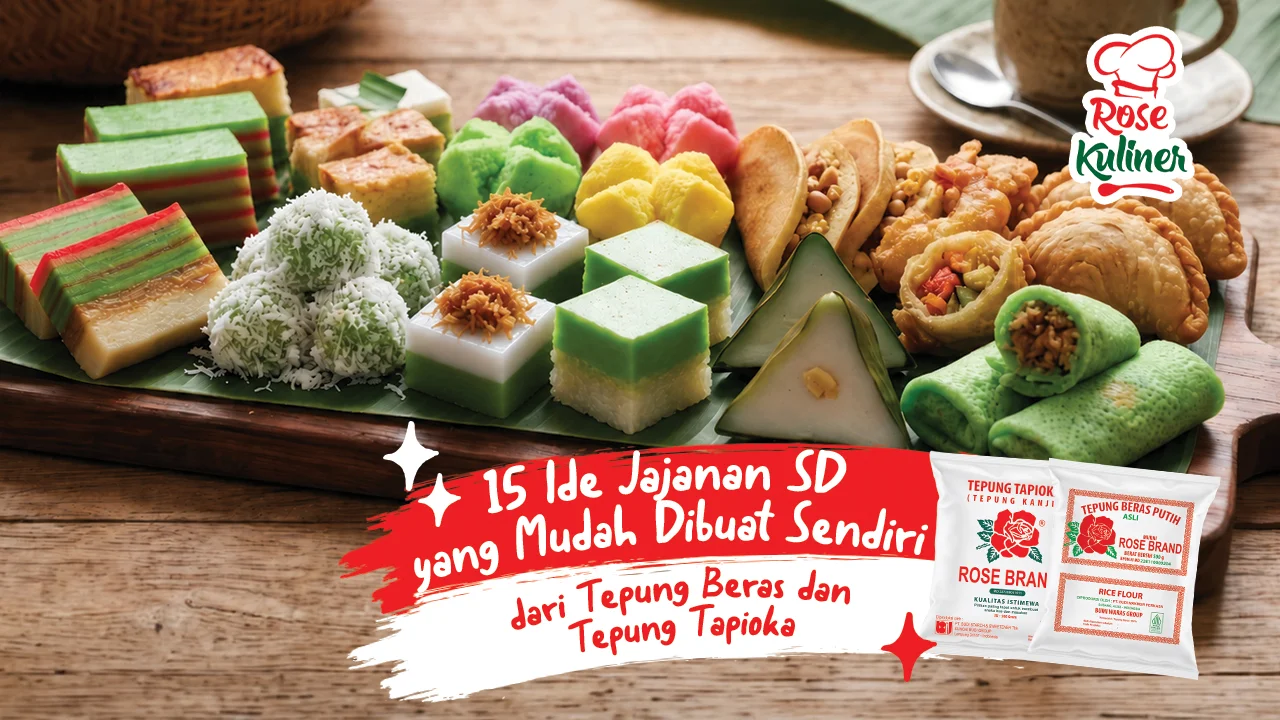
There's a particular snack that's so tasted right back at the gates of elementary school. The chewy chrysanthemum, the crispy Cireng on the edge, the sticky sweet Gemblong, or the warm pinch cake from the mold. The good news is, most of the food is actually made out of two very simple and cheap ingredients, which is rice flour and tapioca flour. These two flour become the backbone of a lot of market food and school snacks because it's affordable, easy to get, and it produces a typical texture.
This article collects 15 elementary school snack ideas that you can build at home from rice flour and tapestry. Some are steamed, some are fried, some are simply stirred and cooked in a frying pan. Everything is chosen because the material is brief and the pace can be followed even by those who rarely cook. Other than saving more than buying so, making yourself complete control over cleanliness and sugar and oil.
Why rice flour and tapioca flour are suitable for Child Services
Before entering the recipe, it's good to understand why these two flour have so frequently appeared in the traditional world of snack. This brief understanding will help you choose the right flour for the desired outcome.
The rice flour is made of fine ground rice. It's soft and it produces a dense, yet soft texture, so it's suitable for steamed wet cake and snack. Rice flour is the main ingredient behind the chips, the pancakes, the muffins, to the cendol.
The tapioca flour, which in many areas is called canji flour or aci flour, is made of cassava essence. Its signature is to produce chewy texture and look when exposed to heat and water. It's the nature that makes Cillok, Cireng, and Pentol have a special bite. If you want to know more about the difference between these two ingredients, Rose Brand have a complete discussion about the type of flour for various kitchen needs.
Both combinations are used often together. The rice flour gives the structure, tapioca flour gives the truth. Many legendary recipe rely on the combination of these two flour in a certain measure.
_
This first group is dominated by chewy and savory texture. This is the most booted snack in the five front of the school, from the boiled one to the crisp fried one.
1. Cillok
Cillok stands for collated aci, and becomes a school icon in many areas. There's enough flour and tapioca, some flour, hot water, garlic, and salt. Once it's coated and boiled to float, it's served with soy sauce, soy sauce, or chili sauce. His chewy and fulfilling texture made him the most favorite of all time.
2. Cireng
Cireng or fried aci, is Cillok's crispy brother. They're similar, but they're flattened and then fried to the outside of the crisp while the inside remains chewy. The most delicious Cireng is getting warmed up with rump spices or chili rawit sauce. You can also add items like chicken suwir or sausage to more content versions.
3. Cimol
Cimol, which stands for erosion, is small balls of fried tapioca flour. The key to the oil is still cold when the cimol is put in, then the fire is slowly raised so it doesn't erupt. Once cooked, cimol sprinkled hot powder, cheese, or ballad. It's very popular because it's cheap and easy to make in numbers.
4. Puller
Pentol is a chewy ball used to be sold with a cart. The dough mixes tapestry with little flour and seasoning, sometimes plus minced meat for a more premium version. Once boiled, the tollbooth is served with warm broth or straight-up simmering sauce and ketchup. To a schoolboy, a pinwheel is a full snack at a very friendly price.
5. Aci Crackers
The crackers from tapioca flour can be made themselves without special tools. Tapoka flour, garlic, and steamed salt, cut thin, dried, then fried into bloom. Even though it takes patience for the seeking process, the result is crispy crackers without a much healthier preservative. It's also an exhilarating activity to fill the weekend with children.
6. Tapoka Ongol
Ongol is a brown chewy market of brown sugar wrapped in a scar coconut. Although the classic version of it uses sawdust, tapioca flour can be an easy substitute for similar veracity. The dough is cooked until it thickens, it's printed, it's rolled over the steamed scar coconut. The legit sweetness and the real texture always reminds us of childhood snack.
7. Getuk Lindri Tapoka
The getups are generally made out of cassava, but the soft chewy texture can be approached with a mixture of tapioca flour. Steamed dough, given natural dye and sugar, then printed elongated like thick noodles. The brooding coconut sprinkles on it complete the taste. Lindri's getuk is a traditional sample of food that's kept a secret across generations.
Soy SD from Rice Flour
Unlike the chewy tapioca group, the catapult of rice flour tends to be softer and softer. Many of them are sweet, wet cookies that fit the food or the afternoon snack.
8. Cuts
Cuts are legendary snacks made from rice flour dough or flour mix, eggs, sugar and milk, then cooked in a special round hole print. His name came from picking it up like it was a pinch from a mold. Serve half-baked to make the center soft, then sprinkle the meases or cheese. The sweet aroma of a freshly cooked cupcake is hard to resist anyone.
9. Pancakes
Serabi is a traditional cake of rice flour dough and sand cooked in clay prints or small pans. The bottom's a little crispy while the top's pore-poured. Serabi can be served sweetly with red sugar kinca sauce or tasty with oncom sprinkles. It's this mixture of rice flour and coconut milk that gives the pancakes their flavor and texture.
10. Pancakes
Mangkok cake or Apem Mangkok is a market that blooms on the top, often called bringing luck. The dough is rice flour with tape or yeast as a natural developer, steamed in small prints. The bright color and the adorable shape made it always draw attention to children. The texture is soft with a bit of fresh acid from fermentation.
11. Pot cake
Squid cake has a thick, soft middle signature with thin, crispy edges. The dough is rice flour and liquid red sugar is fried in oil. It takes a little technique to make it perfect, but it's worth the effort. Cucumber cake is a very sweet and juicy market.
12. Nagarsari
Nagarsari is a wet cake of rice flour and sand filled with banana pieces, then wrapped in banana leaves and steamed. The smell of banana leaves chime with ripe bananas gives them a distinctive fragrance. The texture is soft, chewy light, and not too sweet, so it suits all ages. Nagagari includes a market service that's always on the table.
13. Cendol
Cendol is the main ingredient of dawet ice that is refreshing in the daylight. The green pellets are cooked from cooked rice flour to thickening, then pressed through hollow prints into cold water to form. Served with sutan, liquid red sugar, and ice filtered. Cendol is the perfect snack for hot weather. Makes it possible for you to set up the reality and the sweetness level.
14. Talam cake
Talam cake is a two-layer cake, usually a sweet bottom layer and a savory top layer of santi. The dough blends rice flour with a little tapioca to make the texture soft and a little chewy. This cake is steamed layer by layer so it looks beautiful and appetizing. It's proof that two-flour fusion produces a more interesting texture.
15. Sweet Bubble
It's actually more sticky with sticky rice, but there's a lot of homegrown versions of rice flour and tapioca flour to get the soft insides with crispy outside. Once it's fried, it's coated with thick red sugar. Her sweet caramel and her sticky texture actually made Gemblong a satisfying afternoon snack.
Tips for Self-Artificial Service
Making a snack of rice flour and tapioca flour is actually easy, but there are some little things that determine the outcome. Note the following points so that the results don't disappoint:
- Use hot water for tapioca dough. Hot water helps tapioca flour faster and produces a fitting texture for Cilok and Cireng.
- Not too much tapioca flour on steamed cake. Too much tapioca makes cake hard and look, not soft. Follow the recipe comparison carefully.
- Soar liquid rice flour. For Serabi or Cendol, sifting the dough helps remove the blob so it's smooth.
- Wrap it with medium fire and wrap it in a cloth. A dripping steam can damage the surface of a wet cake, so wrap a pot cap with clean cloth.
- Fried cimol of cold oil. Inserting cimol while oil is still cold and then raising fire slowly prevents it from erupting.
The benefits of making your own home snack
In addition to nostalgia, there's a practical reason why making your own services worth trying. From the health side, you can control the amount of sugar, salt and oil, as well as make sure there's no preservative or overcolored. The rice and tapioca flour itself is a carbohydrate source (https: / / www.healthline.com / nutrition / tapioca) which provides energy, although it should still be balanced with another nutritious dish.
From the economic side, making yourself much more efficient, especially if it's made in bulk for a week's supply of snack. It can also be a pleasant moment with children, as well as introducing them to the wealth of the Nusantara market. For some people, these skills even evolved into promising little business opportunities.
Select the Right Float for the Spoon
The quality of the snack is greatly influenced by the quality of its banks. Good rice flour is clean white, smooth, not clotting, and not smelling musty. So is quality tapioca flour that tastes smooth, sour and clean without the smell of acid.
For consistent results, many home-making and user UMKM culinary rely on products Rose Brand. As a local Indonesian brand with over 45 years of experience, Rose Brand producing rice flour and tapioca that is processed hygientically with modern technology, so the texture is stable and suitable for various traditional recipes. The products are available in many packaging sizes, from household needs to business scales, and can be bought easily through Shopee, Tokopedia, and Bukalpak. With the right ingredients, your artificial snack will be closer to the flavor and texture that has been missed.