
 ROSE BRAND
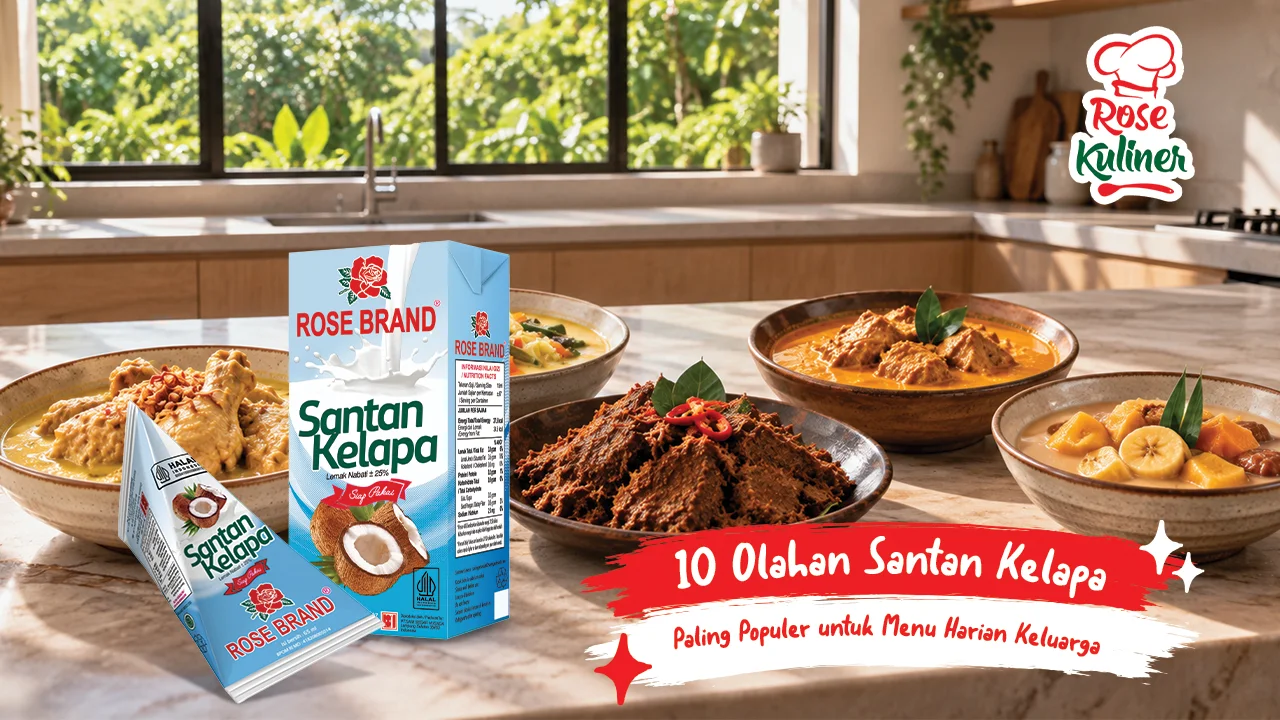
Santan is one of the most common ingredients in the Indonesian home kitchen. Almost every area has one of those hot-bellied, yellow gravy, to warm-up vegetables. The problem is, many people are confused about what else to cook with a sandwich so that the menu at home isn't all it is, or are hesitant because it's afraid that it breaks when it's cooked.
This article summarizes ten of the most popular coconuts in the family daily menu. Everything is familiar in Indonesian tongues, easily made, and the ingredients are easy to find. At the end there's also a tip that chooses and cooks and cooks so that the results are always savory and unbreakable.
Why Santan always has a place in the Indonesian kitchen
Before getting on his cooking list, it's good to understand why the sand is so glued to the Nusantara culinary. Santan is a freshening of brooding coconut meat that gives the tastier taste, the aroma, and the more rich texture of cuisine. The function is not just the flavor enhancer, but also the spice binding so that the spices seep deeper into the cuisine.
In Indonesian cuisine, santan comes in many forms. Some are used as thick gravy like the Oport, some are diluted for vegetables, and some are the main ingredients of market and traditional cake. Because of his role in that size, quality sutan determines the end of the dish. The coconut selected for making coconut milk (https: / / id.wikipedia.org / wiki / Santan) will produce a good tasteless taste of clean freshness without the smell of a bitch.
Now, let's discuss one by one the most often present at the Indonesian family table.
1. Opor Chicken
Opor chicken is almost always a champion when talking about the cuisine. The chicken is cooked in a santi sauce that is fed with yellow spices like a saffron, a coriander, a pecan, and an arch, and then it's cooked slowly and slowly and it's seeps.
The good export key is in the oven. Pretty thick mantis makes the gravy nice and textured, but it needs to be stirred during the cooking process to keep from breaking. The Oport is identical to the Eid moment, but it's actually suitable to cook anytime for the family menu on a regular day.
2. Lodeh vegetable
Lodeh's vegetables are a perfect example of simple, but always missed. It's a variety of vegetables like siamese pumpkins, eggplant, long nuts, and melinjo, cooked in tasty, juicy gravy.
Because it's not so thick, the vegetables are fresh and it doesn't make you eat it every day. It's also flexible, it can be adjusted to whatever vegetables are in the fridge. As a practical cuisine, Lojh vegetables are suitable for a family that wants a non-profit-nutritious menu.
3. Frame
Swimming is the most famous dessert of Indonesia, even recognized world. The beef is cooked in a rich marinade and spices for a long time, until the brush shrinks and the seasoning dries up wrapped in meat.
It's this long cooking process that makes the pot so special. Santan cooked out of the oil, producing deep brown and flavor. It takes patience, but it's worth it.
4. Gulai
Gulai is a big family of bulky sweet food with a typical rosy yellow. They can be all kinds of things, from goat, chicken, fish to young and egg.
What separates the gulai from the other food is the spice-rich spice, including the saffron, the ginger, and the other ferns. His thick and savory hogs always fit with warm rice. For the daily menu, chicken gulai or egg stew is a more economically delicious option.
5. Soto Betawi
Not all soto settled, but Soto Betawi is among the most iconic. His shoulders use sutan to make it so savory and creamy, it's different from the normal soto.
The Italian Soto Betawi is usually beef and entrails, with potatoes, tomatoes and emitting. A blend of marmalade with spices produces a rich-flavored gravy. For the home version, broth and broth can be adjusted for exposure so it's not too heavy in the stomach.
6. Chicken curry
Chicken curry presents a slightly different flavor due to the effects of spices like cinnamon, clutches, and curry powder. Santan acts up a strong spice balance so that it tastes sweet and fragrant.
Curry is suitable for a family who likes strong scented cuisine but remains soft on the tongue. The gravy is thick with rice, dipping, or even bread. Besides chicken, curry can also be made with goats or vegetables.
7. Gudeg or Nuclear Vegetable
The sweet-cooked young vegetables produce one of Java's most distinctive cuisine, which is Gudeg. The young rice is cooked long in sattan and sugar until it's soft and brown.
Gudeg has a distinctive sweet taste, mixed with coconut sugar. Although it's identical to Yogyakarta, a simpler version of the tendrils can be made as a daily home in any house. The quality crystal sugar helps provide a taste of the sugar equivalent to this dish.
8. Soy Jump
Vegetables are a favorite warm breakfast menu. Cuts of caldron sprinkled with shellfish pumpkins, long nuts, and sometimes tofu or eggs.
The scarf is usually yellow because of saffron, with a mild flavor. Vegetables often go on the menu on weekends because they fill and love family members. This cuisine also shows how sweet it can turn simple vegetables into a special dish.
9. Sweated Soup or Vegetable
In addition to strong-bodied cuisine, santans are often used for lighter steamed vegetables. For example, pumpkin vegetables, flat sawleaves, or sawleaves, or sawdust, given a little bit of marinade in order to get some tasty.
This kind of dish is suitable for days when wanting menus that aren't too heavy. Suspension is good enough without making too fat a dish. It's the perfect choice for a family to maintain a daily balance.
10. # Sweet porridge #
Santan not only for savory food, but also star in many sweet dishes. Bananas, Chubster Ubi, Fur Sumsum, and the market plan all rely on the savant to the savory palate that fused with the sweet sugar.
In a sweet dish, the santan gives you a gentle texture and a distinctive scent. It's a favorite, especially during the fast months, while Sumsum porridge often comes as a traditional snack. It's this mix of sugar that makes Indonesian markets so special and difficult to imitate.
Santan Cooking Tip Not Split
One of the most common complaints when cooking sutan is the ruptured gravy, which is when oil and sutan are separated, so the appearance of the cuisine is not interesting. In fact, it's easy enough not to know how.
Here are some things that need to be noticed:
- Stir the sandan constantly during the cooking process, especially as it approaches boiling. Sandan left unstirred is more fragile.
- Use a little fire till medium. Too big a fire makes fast-boiling sand and risk breaking.
- Put a thick potato in the final stage of cooking so it doesn't get too hot.
- Don't close the pot tight while cooking sand because trapped steam can alter the texture of gravy.
With a little attention to the temperature and stirring, the cow will stick together with the gravy and produce a savoury, good-looking dish.
Selecting Quality Santan for Food Day
The fruit of the soup dish depends heavily on the quality of the sutan used. A good piece produces a clean savory, fresh coconut scent, and the right texture for gravy. On the contrary, low-quality sultan can give you a sunburn or even the smell of a jerk ruining the entire dish.
For a family that cooks every day, a packing sandwich is often a practical choice because it doesn't bother to squeeze coconuts. Santan kelapa Rose Brand present as a reliable choice, processed hygientically with modern technology so that his jealousy is consistent over time. As a local Indonesian brand with over 45 years of experience, Rose Brand understanding Nusantara kitchen needs and supporting traditional culinary preservation.
Product Rose Brand it's available in various packaging sizes, from household needs to culinary scale, and it can be bought easily through Shopee, Tokopedia, and Bukalpak. With quality sutan, cooking the family daily menu is more practical without sacrificing flavor.