
 ROSE BRAND
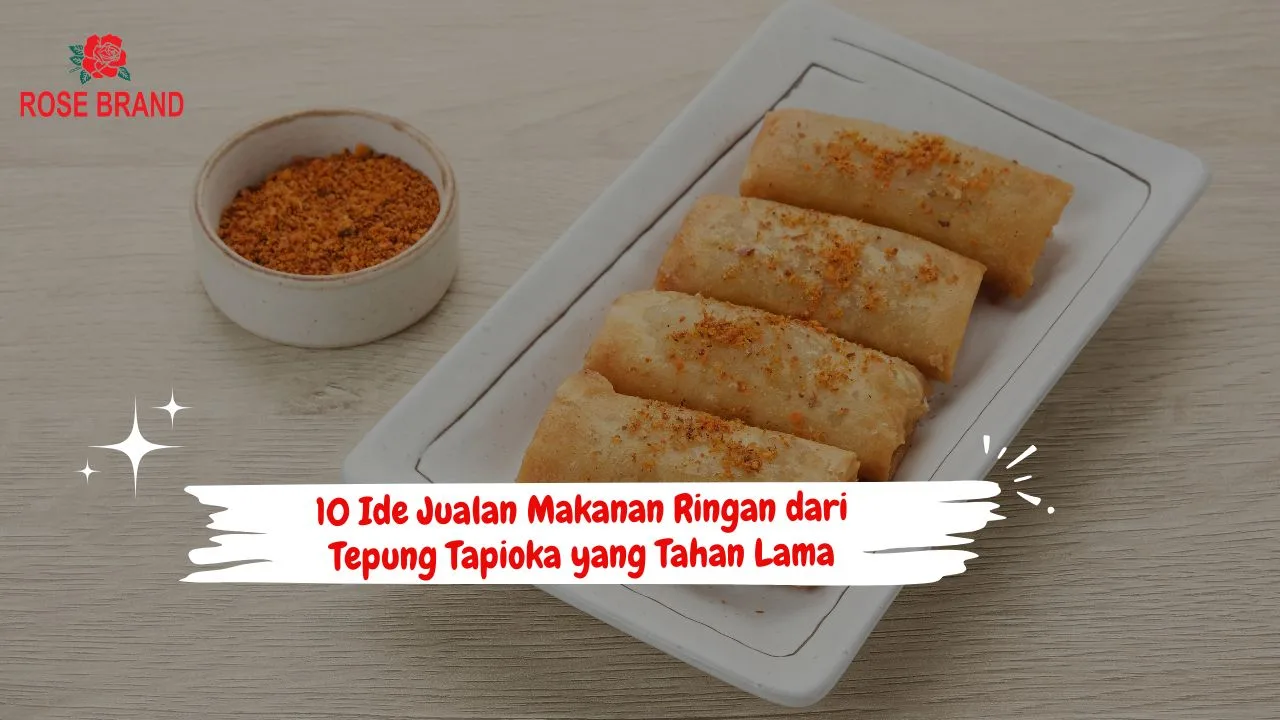
A lot of early culinary businesses are confused about choosing the first product to sell. The capital has to be small, it has to be less complicated, and most importantly, the product has to be durable so it doesn't have a loss when the stock hasn't run out in a day. This is where tapioca flour becomes the answer that is often missed. This simple ingredient is the backbone of almost all of Indonesia's typical savory snacks, from Cireng, Cimol, Basreng, to crackers that last weeks.
This article talks about the ten ideas of food from tapioca flour that is worth selling, with the reasons why each of them is fit for a home effort. You'll also find an explanation for why the tapioca produces long-lasting crispy textures, general errors that make fast-softened snacks, how to store products to keep long life, and how to choose the right flour so that the consistent production of batches to batches.
What is Tapoka Flour and Why It is fit for snack
The tapioca flour is the pure starch extracted from the tapioca. It's clean white, the texture's smooth, and when it's clenched a little bit. Contrary to wheat flour containing gluten-shaped proteins, but it's almost entirely carbohydrates in the form of starch. It's this character that makes him act as a texturer, not a structural giver.
In the snack world, the tenacity of the cassava has produced two things that the entrepreneurs are very much after. First, the texture of the chewy dough is cooked with hot water, like on Cireng and Cilok. Second, light, not hard, crispy texture when the dough is dried up and then fried, like on crackers and Basreng. These two characters can barely be imitated by other flour with the same result.
Some names are often exchanged with tapioca:
- Surround the kanji: another name for the same product, just different mention in different areas.
- Aci Flour: popular names in Western Java, also refer to tapioca.
- Sagu flour: It comes from the trunk of a sagu tree, not a cassava, despite similar behavior.
- Maizene flour: coming from corn, the texture is softer and not as chewy as tapioca.
Why would a Tapoka-Supplementary Snack last long
The key to the tapioca resistance is water levels. The casings are cooked and dried up, and the low water content is much harder to grow microbes. That's why raw crackers can be stored months before fried, while wet fries last only a few hours.
Tapoka also doesn't contain any meaningful fat. Fats are the fastest component of shit and makes a musty snack. Pure tapioca-based products are relatively safe from this problem, as long as the cooking oil is used cleanly and the process is correct.
Therefore, in practice there are two lines of product that you can choose. Wet lines produce snacks ready to go like Cillok and Bacso Aci, generally one to two days. The dry line produces crispy snacks like crackers, Basreng, and a dry Cireng, which can last two weeks to a few months if packed together. For an effort to reduce the risk of a stale product, the dry line is clearly more profitable.
Ten Light Food Idea of Tapoka Flour
Here are ten products that are proven to have markets in Indonesia, sorted from the most easily executed for rookies.
1. Dry Cireng
Cireng is fried aci, a typical Sunda snack with crispy outside and in a chewy inside. The dry version is made by slicing thin dough that's been steamed, branching it up really stiff, then frying it. The result is light chips that last up to a month in closed packaging.
The excess of this product is very small, and it's very flexible. Spicy flavors of orange leaves, cheese, and balado are three variant most sought buyers.
2. Basreng
Basreng, short for fried meatballs, is being one of the best-selling snacks in the market. Scrambled fish meatballs that are rich in tapioca are fried to dry and seasoned spicy. This snack has good endurance and wide margin because buyers judge the products of the bubbles, not just the ingredients.
For starters, start from basreng sticks or basreng orange leaves, two of the most stable variants demand throughout the year.
3. Aci Crackers
Aci crackers are a classic product with demand that never recedes. The tapioca shots and steamed spices, thin-cut, dried-up, then fried to the ground. Raw crackers can be kept for months, so you can produce it in large quantities at once and fry it as requested.
This business model is flexible too. You can sell a kilo of raw crackers to a restaurant and a restaurant, or sell a ripe version of the package ready to consume at a much higher price of sale.
4. Dry Cimol
Cimol is usually sold hot from wagons, but the dry version is more suited for online efforts. Little-balls of tapioca dough fried until it was completely dry, then sprinkled with sprinkles. The texture is crispy and no longer chewy, so it can be kept and sent remotely.
5. Tapioka Macaroni and Anaka Snack Kiloan
A kilo snack like Macaroni Pedas, Pilus, and Krispi's intestines are almost all wearing tapioca as a binder or a pail. You don't have to manufacture it all by yourself. A lot of entrepreneurs start by buying large amounts of raw products, reseasoning them with their own recipes, then packing them with a personal brand.
6. Rice Crackers and Crackers
Gender crackers use tapioca-mixed rice. In addition to low capital, it has a strong story value because it reduces household food waste. It's got a lot of power during the process of finding it, and there's no part of it that's still muffled.
7. Tapoka-plated Singkong Chip
Regular cassava chips are often less crispy when just plain fried. It coated the sliver with a tapioca solution before it was fried, resulting in a crispy surface and remained crispy longer. This simple technique often divides home chips and chips from factory quality.
8. Cheese Stick and Garlic Sticks
The savory steak mixes tapioca and flour to get crispy texture but remains fragile when bitten. The product was very strong during the springtime and Christmas, when the request for the snack jars soared. The age of the store can reach a month when packed in airtight containers.
9. Dry Seblak
A dry tub combines tapioca crackers with typical whoring spices. The product targets the market for young people who like spicy and sharp tasteless taste. Because the base is dry, the life is long and the delivery costs are light.
10. Raw Crackers for Reseller and UMKM
The last idea was more business than snack itself. Instead of selling ripe products, you produce large amounts of raw crackers and supply them to stalls, restaurants, and fried vendors. The cycle is faster, it doesn't cost much, and the request repeats every month.
Modal and Defense Compliance
As a brief picture before selecting a product, here's a rough comparison between the type of tapioca snack.
- Wet products, like Cillok and Aci Bakso: small capital, but only last a day to two.
- Dry fried products, such as Dry Cireng and Dry Cimol: small capital, lasting two weeks to a month.
- Raw cracker products: middle capital because it takes suntan land, but it lasts months.
- Pack snack products with spawning spices: larger capital for packaging and brands, but margins and the highest value.
For starters with limited capital, the safest combination is to start with one dry product with two variant flavors, then expand the variant after a stable demand.
General Mistake Make Quick Snitch
Most of the buyer's complaints about home snacks are rooted in processes, not recipes. Note the following:
- It's not a perfect batch when it's steamed. A pali that is unlicensed will absorb excess oil and generate a strong texture, not crispy.
- The seeking is not complete yet. The middle part that's still muffled will make the crackers fail to expand and bluster fast.
- Oil temperature is too low. The less hot oil makes the snack absorb the oil and mushy in a matter of hours.
- Packed it while it was still warm. The heat vapor trapped in the packaging will condense and instantly damage the vulnerability.
- It's not airtight. The humidity of air is the enemy's main dry snack, especially on the coastal regions.
- Replacing tapioca with other flour without adjustment. Wheat doesn't produce the same vulnerability because its gluten content just makes texture look.
How to save the Snacks for Simple Age Long
Storage determines whether your product lasts a week or a month. Once fried, put a snack on the oil absorbing paper until it's really cold, then put it in an airtight container. Adding silica gel food grade in packaging is very helpful keeping vulnerabilities, especially for products sent out of town.
For raw crackers, keep them in sacks or thick plastic that are sealed tight, away from floors and damp walls. Check periodically. The musty smell, the black spots, or the texture that's flexible is that product signs are not worth fried. The person who sells packaging products should also follow the food safety principles of the Ministry of Health (https: / / www.kekes.go.id /) about the hygiene process and label the production date.
Keeping the tapestry is just as important. Put it in a closed container at dry space. Grass that clots or smells unnatural should not be used, because it will damage the entire batch of production.
Select the Right Tapoka Flour for Production
The consistency is a thing that distinguishes effort that survives with an effort that stops halfway. The quality tapioca flour has clean white colors without any ash, fine texture without hard blobs, and no smell of acid. The steady water levels make your prescription sheet repetitive.
This is where the brand selection becomes a business decision, not just a taste. Rose Brand it's been over 45 years supplying kitchen supplies to households and Indonesian culinary businesses. Tepung tapioka Rose Brand it's a hygienic process of modern technology so that the mums of uniforms go into packaging, and it's available in different sizes from small packaging to recipe tests to large packaging needs for daily production. The product is easy to get in Shopies, Tokopedia, and Bukadak, so you don't have to worry about running out of stock in a crowded order.
For UMKM offenders, the uniformity of raw materials means uniformity and texture. The buyer who gets the same results every time he buys is the buyer that comes back again, and the buyer that comes back is the foundation of the growing snack effort.